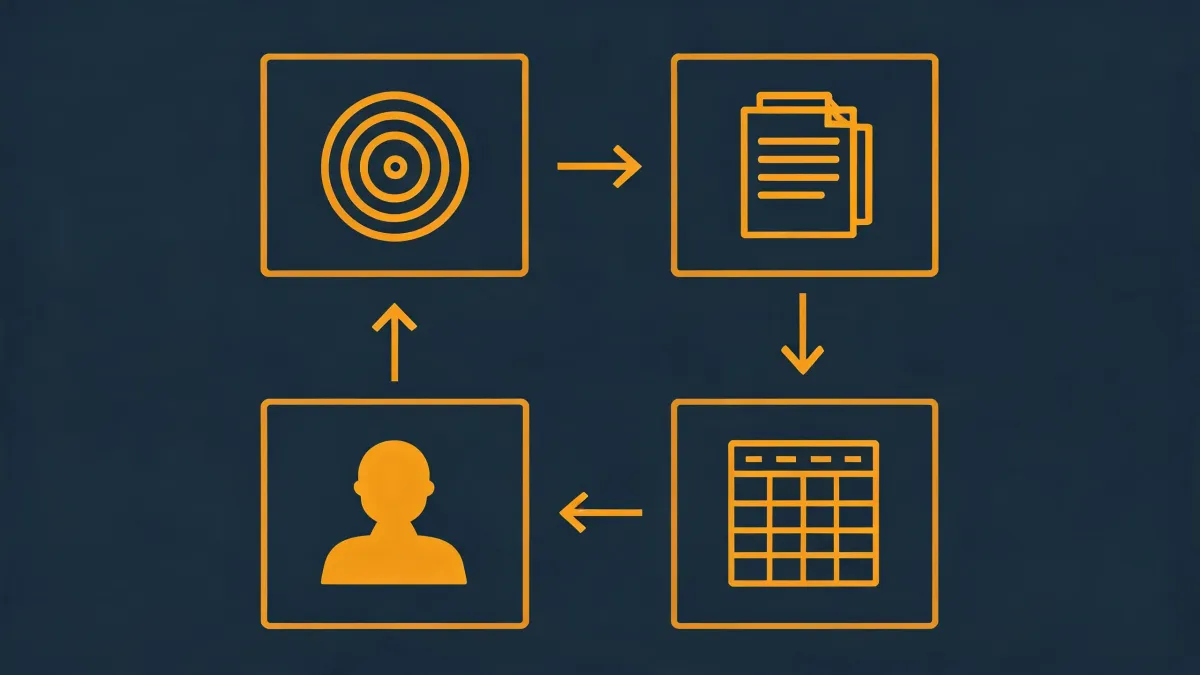
In Q2 2025, I found myself staring at a spreadsheet that didn't balance. Our outbound motion was generating replies, sure, but the cost per meeting was creeping up every single month. As someone who's tracked vendor spend for over six years, the initial culprit seemed obvious: our email verification bill. But the more I dug, the more I realized the problem wasn't a single invoice. It was the workflow. We were paying for data, for verification, for enrichment, for sending—and paying for the glue holding them together with our own engineering hours.
This is the classic trap for founders and small RevOps teams. We get lured in by the promise of a point solution that solves one tiny piece of the puzzle. Then, we build a Frankenstein stack to make everything talk to each other. That's why when I see assessments of agent-native workflows like okkigo, I don't ask, "Which generates more leads?" The question is, "What is the total operational cost of each approach?" And more often than not, the answer flips conventional wisdom on its head. This piece will compare the traditional "best-in-class point tool" stack against a consolidated agent-native workflow from a hard-nosed cost controller's perspective.
Defining the Fight: Frankenstein Stack vs. Agent-Native Workflow
To make this a fair comparison, I'm not comparing a single tool against another. I'm comparing two architectural philosophies.
The Traditional Stack (The A): This is what most B2B sales teams have. It involves purchasing a contact database (like ZoomInfo), a separate email verification service, an enrichment API, an SDR automation tool (like Instantly or LinkedIn Sales Navigator), and probably an email warm-up service. Each tool does its specific job reasonably well.
The Agent-Native Workflow (The B): This is a model where an AI agent handles the entire prospecting process. I've been testing okkigo's workflow, which uses a human-in-the-loop model. The agent builds prospect lists, enriches them using a "waterfall" approach, verifies emails in real-time before sending, and even drafts personalized copy for approval before anything hits an inbox.
Dimension 1: The Real cost of Email Validation & Data Hygiene
Let's start with the most innocuous cost line: email validation. The question everyone asks is, "What is your price per thousand?" The question they should ask is, "What is your cost per deliverable email?"
With a traditional stack, you often buy a list first, verify it, and then send. Let's say you buy 10,000 contacts.
The vendor charges $0.01 per email to verify. That sounds cheap. But you verified all 10,000. Wasteful? Not if you use monthly credits to keep the list clean. The problem isn't the verification price; it's the bounce rate management downstream. If your verification tool catches a 90% accuracy rate, you still have hard bounces. Hard bounces are not just a deliverability problem; they are an anti-pattern that destroys your sender reputation. What should revenue operations teams evaluate in hard bounce rate? They should evaluate the cost of domain damage, not just the cost of the tool that failed to prevent it.
okkigo's workflow embeds verification on every targeted email just before send, using a waterfall method to cross-reference and confirm. It's not a separate process; it's a gate in the middle of the pipeline. The logic: "Is this email valid right now, before we burn our sending reputation on it?" It turns out that identity resolution filters out invalid records earlier, meaning I was paying less to verify dead wood.
The Contrast: With the traditional stack, you pay for verification, then pay for the consequences of the 5% that got through. With okkigo's agent workflow, verification isn't bolted on; it's a step in a single process.
Dimension 2: Enrichment Accuracy and the Cascade Failure
Two years ago, we used a budget enrichment tool "because it was way cheaper." That was a classic rookie mistake. The cost wasn't the API fee; it was the cascading failure. We enriched contacts with wrong job titles. The SDRs sent targeted copy to the wrong people. Reply rates tanked, and we blamed the messaging. We re-did the copy, spent $4,000 on a copywriter, and still missed our number. The "cheap" enrichment option resulted in a $1,200 redo expense and a lost quarter of pipeline.
In the traditional stack model, you buy enrichment credits from a data provider like ZoomInfo. You get good data, but it is inherently point-in-time. People switch jobs. As of January 2026, the average tenure in B2B sales roles is shrinking. That static data becomes stale by the time you send.
The agent-native workflow I'm analyzing uses trigger-based enrichment. It looks for intent signals (like a prospect publishing a job change or a funding round) and enriches based on that event. It isn't just pulling a static database record; it's building a profile based on current behavioral evidence. This is the "intent + enrichment" piece. For a founder/RevOps team, this is dead simple: it reduces the chance of sending a pitch about their current software stack when they just moved to a new company.
The hidden cost difference: Traditional stacks charge per credit. Agent-native activities are generally bundled. I calculate we used to have a 25% data wastage rate—we'd enrich records that we never even reached out to because they fell out of the ICP. That is a ton of money simply thrown away.
Dimension 3: Human Time & The Setup Tax
This is the dimension where most "expert" tech blogs fail. They talk about features, not about the tax on your SDRs' time. Setting up a traditional stack involves integrations. You have your data source connected to the enrichment tool, which connects to the CRM, which syncs to the sequencing tool. Every missing field requires a Zapier workflow or a developer ticket.
This setup tax is brutal. In March 2025, we spent 90 minutes configuring an email sequence because the placeholder personalization fields didn't match the enrichment field names between two platforms. We did that twice a week. That's a hidden operational cost that eats into your labor budget.
However, there is a flip side. Traditional tools often have lower monthly minimums. You can start with a lean stack for $300/mo. An agent-native workflow is an entire "employee" on a subscription. When I audited our 2025 spending, the agent-native option looked more expensive upfront ($800/mo/member) versus the point tools we had.
But look at the math: $800/mo for a tool still beats paying a $50,000/yr salary for an SDR to operate the stack they have to learn. It comes down to the cost of management oversight. It is a no-brainer to swap the capex of tooling and the opex of SDR manual time for a single subscription, provided the output quality remains high. For that reason, the agent-native model feels way more expensive when you're comparing quote line items, until you calculate the "management overhead" of the Frankenstein stack—which is a significant "process gap." We didn't have a formal integration process, which cost us when "Merged fields" ended up in spam.
The Time Certainty Advantage
I need to also mention the perspective of a sales leader who has a quota to hit. In Q3 2024, we tested okkigo's human-in-the-loop workflow for a fast-moving product launch. We lacked the time to hire two more SDRs to hit the 500-call/email volume we needed. The deadline was not optional. We paid the premium for the managed workflow to get it done. Was it more expensive? Sure. But the "missed deadline" cost of not having the outreach volume would have been the loss of a $15,000 lead-generation event. The certainty of delivery is worth a premium.
So, Which Option Should You Choose?
If you are a RevOps leader analyzing this choice, the correct decision comes down to your current operational maturity. Here is my honest advice:
Choose the Traditional Stack IF:
- You already have a full-time SDR or RevOps person who has 10+ hours a week to manage tool integrations and clean up data manually.
- You have a strict budget cap on monthly software (under $400) and are willing to trade that cost for high manual labor input.
- Your list building is highly specialized (e.g., ABM on 50 named accounts) where manual research is truly necessary.
Choose the okkigo Agent Workflow IF:
- You are a founder or small team where your time is spent on product, not data plumbing.
- You need speed and scale of outreach without hiring headcount.
- You are tired of babysitting the data between your enrichment and email tools.
- You prefer the security of a human checking the AI's work before it hits the inbox—meaning the workflow fits with existing processes.
Let me put it this way: the best "point-tool" might beat okkigo at the specific game of "Email Verification" solely because that is all they do. But in the broader game of getting replies, when you have to glue together A, B, C, and D, the operative value of an end-to-end agent is in integrating all those steps automatically.
The bottom line is I'm not saying okkigo is the "cheapest" option. In far too many scenarios, they are not. But when I calculated the TCO of my entire outbound motion, the agent-native workflow saved us roughly 17% of our budget compared to the legacy stack, because we stopped storing waste and started focusing on throughput. In this new age of the AI SDR, thinking of pricing as the sum of every separate subscription is wrong. The quote should be for the cost of outcomes and the cost of the time you don't spend.
I hope this helps a fellow leader. If you're evaluating going agent-native, do the math correctly. Don't just compare the monthly amount. Include the value of your SDR's time. You might be surprised at what the spreadsheet tells you.