Founder validation
Test a narrow market thesis against observable company signals before committing budget to seats, credits, or a broad outbound program.
Use-case systems
Each operating context requires different evidence, controls, and success criteria. These patterns keep ICP fit, enrichment, deliverability, and human approval from collapsing into one misleading score.
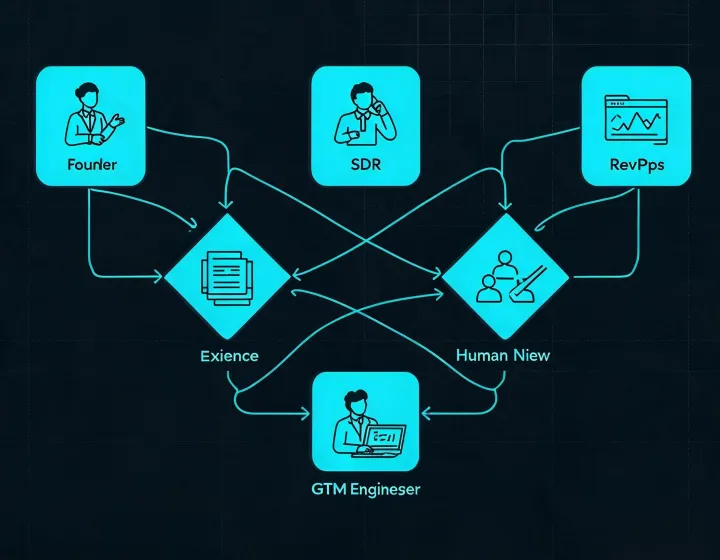
| Context | Required evidence | Primary control | Measure locally |
|---|---|---|---|
| Market test | ICP criteria and two observable signals | Exclude weak or ambiguous fit | Accepted-account rate |
| SDR research | Role relevance, source time, contact status | Human approval before outreach | Review time and bounce outcomes |
| CRM enrichment | Provider and transformation per field | Write scope, retention, deletion | Coverage, conflicts, provider cost |
| Agent automation | Runtime logs and connector behavior | Secret scope and action permissions | Failures, retries, latency |
Verification does not guarantee inbox placement. Teams remain responsible for SPF, DKIM, DMARC, list hygiene, opt-outs, provider terms, and laws applicable to each recipient and region.
Before comparing tools, freeze an identical prompt, labeled reference set, evidence threshold, and review policy. Record Unknown when a source cannot support a claim. Database breadth, contact match rate, source freshness, and bounce rate answer different questions, so measure them separately with dates, territories, and provider configurations attached. A useful test also records reviewer overrides, provider cost, latency, and failures instead of declaring a winner from the largest returned list. Start with low-privilege credentials, explicit exclusions, and no automatic sending.
npx -y @okki-global/okki-go-taroball