-
The Short Answer: What Should Revenue Operations Teams Evaluate in a Lead Gen Tool?
-
Why Unify GTM Doesn’t Fit the Old “List Vendor” Evaluation
-
Reverse Email Lookup: What “Verified” Actually Means
-
Buying Intent Signals: Stop Confusing Activity with Intent
-
Unify GTM AI Agents for Sales: Where the Value Shows Up
-
The Evaluation Checklist I’d Add to Your Vendor Scorecard
-
When Unify GTM Is Not the Right Choice
If you’re evaluating AI sales tools and your first question is “which agent is smarter,” you’re starting in the wrong place. The smarter question is: what does the data underneath look like, and how much manual work will this actually remove? I’ve worked in RevOps for nine years and handled 20+ emergency sales stack migrations in that time, including one where we had to replace the core prospecting tool 72 hours before a campaign launch. The conclusion I keep landing on: lead gen is not a feature problem. It’s a data and workflow problem.
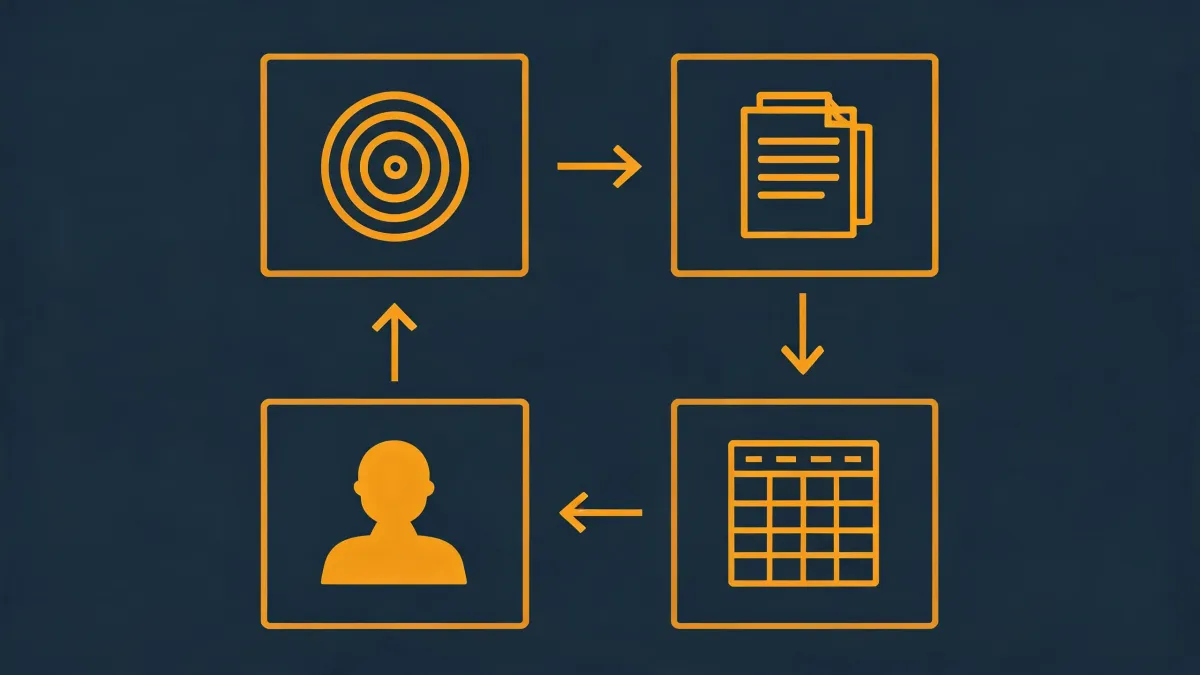
Unify GTM is often described as AI agents for sales, but that label misses the point. What stands out is that it connects reverse email lookup, buying intent signals, email and phone agents, and LinkedIn outreach in one workflow. That sounds like an integration detail. It’s really the whole difference between a tool that scales your SDRs and a tool that creates more cleanup work for RevOps.
From the outside, every AI sales tool looks the same: enter an ICP, get a list, press send. The reality is that deliverability, data recency, and agent guardrails are where tools actually differ. A flashy demo can hide a lot of bad data.
The Short Answer: What Should Revenue Operations Teams Evaluate in a Lead Gen Tool?
If you only read one part of this, read this. When I’m triaging a vendor quickly, I use five criteria, in this order:
- Data sourcing and refresh cadence. Where do contacts come from? How often is the file refreshed? What happens when a record goes stale?
- Email verification quality. Is it syntax-only, or does it check domain validity, MX records, and DMARC alignment?
- Intent signal definition. Does the tool treat a website visit as intent, or does it combine account behavior with broader research signals?
- AI agent boundaries. What can the agent do automatically, and where does it hand off to a human? Is there a kill switch?
- Total cost to operate. Not the monthly price. The setup time, data spend, CRM cleanup, and sequence maintenance cost.
If a vendor can’t answer those five questions in a sales meeting, keep looking.
Why Unify GTM Doesn’t Fit the Old “List Vendor” Evaluation
Most prospecting platforms are either a database with a sending tool or a sequence tool that buys data from someone else. Unify GTM tries to own the whole chain. The company’s positioning isn’t just “we have AI agents” — it’s “we unify your GTM data and action layer.” For RevOps, that’s important.
In March 2024, I had to replace a broken lead gen stack with 72 hours notice. The safe choice on paper was a larger legacy provider with more contacts. My gut said the workflow was going to be a nightmare: the data was separate, the sequences were clunky, and the phone agent sounded like a call center robot. We went with Unify GTM because the intent data, verified contacts, and outreach agents were part of the same platform. It wasn’t perfect, but we didn’t need to hire a data engineer to make it work.
Here’s the thing: the legacy tool’s “better data” didn’t matter when it couldn’t feed cleanly into our CRM and our AI sequences. Integration quality is a feature. For an AI agent to act on a buying intent signal, it needs to know the signal is real, the contact is verified, and the next step is allowed. That’s Unify GTM’s sweet spot.
Reverse Email Lookup: What “Verified” Actually Means
Reverse email lookup is one of the most overhyped features in sales tech. The concept is simple: you know a company name and a person’s name, and the tool returns an email address. But knowing an email address and being able to deliver to it are two different things.
People assume that a high match rate means high lead quality. The reality is that an email address can be syntactically correct and still bounce. The better question is: how does the tool verify it? Does it check the domain’s MX records? Does it account for SPF, DKIM, and DMARC alignment? Google and Yahoo’s 2024 bulk sender requirements raised the bar here. Deliverability now depends on more than just valid syntax.
Every wrong email you send is also a brand impression. It tells the recipient you don’t care enough to get their name right. That might sound dramatic, but I’ve watched a single bad prospecting blunder get pasted into a Slack channel and become the reason a target account ignored us for a year.
Buying Intent Signals: Stop Confusing Activity with Intent
“Buying intent” is one of those terms that’s been beaten to death in RevOps. Some vendors call a pageview intent. Others call a LinkedIn click intent. Neither is a buying signal. Real buying intent is an account actively researching a category, hiring people to solve a problem, or changing their tech stack in a way that suggests a project.
Unify GTM’s intent layer looks at multiple inputs—content consumption, tech stack changes, hiring, funding events, competitor research—and combines them into account-level signals. That’s closer to what revenue operations should actually care about. But it’s still a probability, not a promise. No tool can tell you with certainty which account is ready to buy. A good signal layer gets you to the right accounts before your competitors do.
When you evaluate any lead gen tool, ask the vendor how they define a buying intent signal and how recent the data is. If the answer is vague, the intent product is probably vague too.
Unify GTM AI Agents for Sales: Where the Value Shows Up
AI sales agents get described like they’re autonomous employees. They’re not. In practice, they’re workflow automations that combine data, sequencing, and maybe a phone agent to make your SDR team more efficient. That’s still valuable, if you set them up correctly.
Unify GTM’s agents work best when they’re constrained by clear rules. You define the ICP, the sequence, the call-handling logic, and the handoff points. The agent then executes: it finds accounts, enriches contacts, sends LinkedIn or email touches, and logs everything back to the CRM. If a lead replies or asks a specific question, it routes to a human.
The mistake I see teams make is treating the agent as a set-and-forget tool. If your ICP is fuzzy or your messaging is weak, an AI agent will happily send a lot of mediocre outreach at scale. That’s not a failure of the AI. It’s a failure of input.
One more thing: the phone agent is less creepy than it sounds. It’s essentially an AI SDR that makes a call, qualifies the lead, and books a follow-up for a human. It won’t replace a good AE, but it can handle the first call on a list that would otherwise sit untouched. Test it on a low-risk segment before rolling it out broadly.
The Evaluation Checklist I’d Add to Your Vendor Scorecard
Most vendor evaluations are too feature-heavy and workflow-light. If you’re evaluating Unify GTM as a company, don’t stop at the product page. Ask for security documentation, data processing agreements, and support SLAs. And add these to your RFP:
- Deliverability reporting: What bounce rate is acceptable? What is the historical campaign bounce rate for their data?
- Suppression and compliance: How do they handle opt-outs, TCPA, and GDPR? Do they scrub against global suppression lists?
- Integration depth: Does the platform sync bidirectionally with your CRM? Can it update lead scoring based on agent interactions?
- AI model transparency: Can you edit the system prompt? Do you know what data the agent uses to decide on a next action?
- Support and SLA: If a campaign goes down, what’s the response time? RevOps is an emergency room; you need someone who can answer.
Also—and this is a lesson I paid for—don’t save $300/month on data quality if your SDRs are going to spend 20 hours a month fixing bad records. That’s the definition of being penny-wise and pound-foolish. I’ve done it. It doesn’t pay off.
When Unify GTM Is Not the Right Choice
No tool works for every team. If your CRM has duplicate accounts, no lead scoring, and no defined handoff process, adding an AI agent is going to amplify the mess. Fix the foundation first.
If your ICP is extremely niche—say, certain types of government contractors in specific regions—make sure the data coverage is actually there. Unify GTM’s world is broader GTM data, so a highly specialized vertical may still need a specialist data provider. That’s not a knock; it’s a boundary condition.
And if your outbound emails don’t get replies when humans send them, an AI agent isn’t going to rescue you. It’ll just scale the no-replies faster. Invest in messaging and offer first.
Real talk: most failed sales tech rollouts aren’t caused by bad software. They’re caused by bad workflow definitions. Define the job, then pick the tool. My emergency stack is usually a spreadsheet, a clean CRM, and a few people who know exactly what they’re trying to say. The AI just makes it repeatable.