-
What is Unify-GTM?
-
How does Unify GTM automation software help with outbound emailing?
-
Does Unify GTM LinkedIn automation feel spammy?
-
What is intent data? (An intent data overview)
-
Who are contact data providers and why do they matter?
-
What is sales intelligence and when should a B2B sales team use it?
-
What should you NOT use intent data or sales intelligence for?
-
Do you still need a CRM if you use Unify GTM?
I review content for a B2B sales automation company. Roughly 200 pieces a year, mostly blog posts, email sequences, and enablement docs. In Q4 2024, I rejected about 14% of first drafts for overpromising. 'Guaranteed replies' has a special place in my rejection notes. This FAQ is the version of those conversations I'd hand to a sales team evaluating Unify-GTM.
Here's what we'll cover:
- What is Unify-GTM?
- How does Unify GTM automation software help with outbound emailing?
- Does Unify GTM LinkedIn automation feel spammy?
- What is intent data? (An intent data overview)
- Who are contact data providers and why do they matter?
- What is sales intelligence and when should a B2B sales team use it?
- What should you not use intent data or sales intelligence for?
- Do you still need a CRM if you use Unify GTM?
What is Unify-GTM?
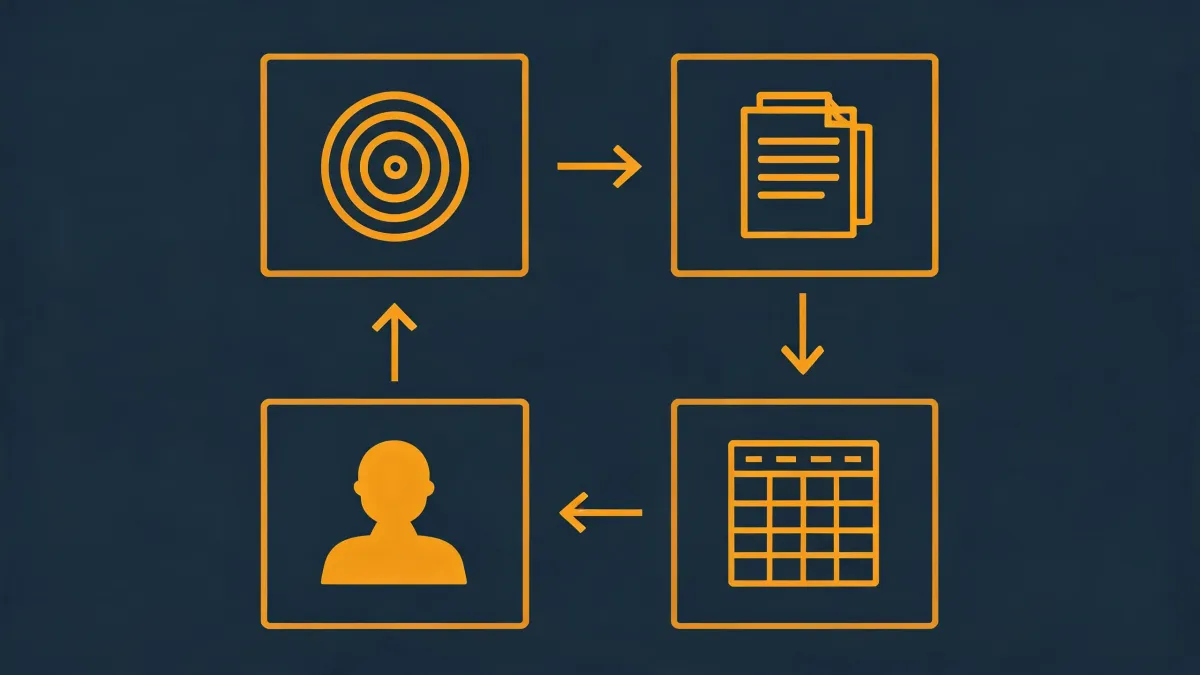
Unify GTM is an AI sales automation platform that connects outbound emailing, LinkedIn automation, AI phone agents, email verification, and intent data in one workflow. The 'unify' part is the point. Instead of stitching together a sequencing tool, a LinkedIn extension, a data provider, and an email verification service, you run it from one place. Actually, that's not quite the whole definition. The broader version: it's an operating layer for revenue teams that want outbound to feel less like a pile of disconnected tabs.
How does Unify GTM automation software help with outbound emailing?
If you landed here searching for 'unify gtm automation software outbound emailing,' here's your answer: it does the repetitive parts that make reps live in four tabs. Sequence creation, personalization variables, send-time controls, and follow-up logic. It also verifies email addresses before a campaign goes out, which is less glamorous than a phone agent but more important. Bad bounces hurt deliverability and make your team look sloppy.
Does it replace a great rep? No. Does it replace manual copy-paste? Yes. That's the efficiency gain I care about. Cold email is still one of the lowest-cost channels out there, especially compared to direct mail—USPS first-class letter is $0.73 as of January 2025, per usps.com—so the economics favor doing this right instead of blasting.
And since commercial email has compliance rules, per FTC guidelines (ftc.gov), every email needs a valid postal address and a working opt-out. I'm not a lawyer, but I still read through those before approving any template (note to self: do another FTC review next quarter).
Does Unify GTM LinkedIn automation feel spammy?
If your search was 'unify gtm linkedin,' you're asking whether LinkedIn automation is a feature or a nuisance. It's both. It can feel spammy if you let it. I've reviewed campaigns that connected with 50 people a day and didn't add a single note. That's not automation; that's noise. What makes LinkedIn automation defensible is restraint. Keep connection volumes low, personalize the first touch, and don't automate messages way past the initial request.
I should note: I don't know LinkedIn's exact terms on any given Tuesday, and it's not my job to interpret them. But I can tell you from quality reviews that a conservative sequence—connect, wait a couple days, maybe one follow-up if they accept—is very different from carpet-bombing.
What is intent data? (An intent data overview)
Intent data is the digital equivalent of seeing someone pick up a product in a store, check the price, and put it in their cart. It's behavioral signals that suggest a company or person is actively researching a problem. Common sources: content consumption, webinar attendance, review sites, and search queries.
It took me 3 years and about 150 campaigns to understand that intent data is not a lead-generation shortcut. It's a prioritization layer. A classic example: a bunch of IPs from a target account visit your pricing page after reading a comparison guide. That's first-party intent. Third-party intent comes from publisher networks that capture anonymous research topics before a company ever lands on your site. It tells you who seems to be moving, not who will definitely buy.
Who are contact data providers and why do they matter?
Contact data providers—ZoomInfo, Lusha, Apollo, Clearbit, and others in that category—maintain databases of business contacts and company attributes. They sell email addresses, phone numbers, titles, company size, tech stacks, and sometimes location. If you've ever run an outbound campaign, you've probably bought a list from one.
They matter because your whole sequence dies if the email bounces. But they're not perfect. We did a quality audit in Q1 2024 on three providers: the best one had 12% invalid emails across 10,000 records. That's just our data, not a public benchmark, but it's why verification matters.
I still kick myself for not negotiating data refresh frequency into our first contract. If I had, we would've caught a rotting list before it went out to thousands of contacts. The most frustrating part of evaluating these providers: they all claim 'real-time' data. You'd think real-time means a signal triggers an update, but sometimes it means they refresh their export once a week.
What is sales intelligence and when should a B2B sales team use it?
Sales intelligence combines firmographic, technographic, intent, and behavioral data to help you decide who to talk to and how. It's not just a list of names; it's context. Think: a company is using a competitor's tool, is hiring for a role your product affects, and has shown sudden interest in your category. That's sales intelligence.
Should you use it? Yes, if you sell into accounts where research matters. If your deal size is small and your cycle is short, a lighter touch is fine. For mid-market and enterprise, sending without sales intelligence is like cold calling without knowing what the company does. Actually, it's worse: you know what they do, but not why they should care.
What should you NOT use intent data or sales intelligence for?
This might be the most important question in the article. Don't use intent data to label every account that spikes as 'sales-ready.' A spike in research could mean they just hired a new CMO and are doing due diligence. Interesting, but not hot.
And don't use sales intelligence to over-personalize to the point of creepiness. Mentioning that a prospect's VP of Engineering left in a same-day trigger isn't helpful; it's unsettling. Use intent data to become relevant, not omnipotent. At least, that's been my experience with B2B software.
Do you still need a CRM if you use Unify GTM?
Yes. Unify GTM is not a CRM. It's a workflow and automation layer. You still need a system of record for opportunities, forecasting, account hierarchies, and history. Think of it this way: Unify GTM helps you execute the next best action; your CRM helps you remember the last 50.
Some teams try to use an automation tool as a CRM because it's shinier. That has a shelf life. You'll miss the reporting, or your deal stages will end up in a spreadsheet. Unless you're a solo operator with 50 prospects, keep your CRM.