For B2B outbound, the shortest answer to what data is required to find an email is this: you need a full name and a company domain. A professional email finder starts with those two inputs. Company size, revenue, industry, and location are useful for segmentation, but they are not required for the lookup.
I'm a GTM engineer who has spent six years handling outbound data pipelines for SDR teams. I've personally documented three significant mistakes that added up to roughly $9,000 in wasted tooling and cleanup time. Now I maintain our team's checklist: verify first, verify cheaply, and never put an ambiguous email status into a send queue.
If you're evaluating Okki Go API integration, the same principle applies. Give the API a clean name and domain, and let it do the resolution. Send dirty fields, duplicate names, and old company URLs, and no enrichment step can repair the damage.
What data is required to find an email?
Here is the baseline I use when I configure Okki-Go:
- First name and last name. Use John Smith, not jsmith, John, or a field that contains a job title. The finder needs a human-level identifier, not a fuzzy label.
- Company domain. The person's mailbox is assumed to be on this domain. If you only have a LinkedIn Sales Navigator company URL, convert it to the domain before calling the API. Common URL normalization helps, but it is not a replacement for clean input.
- LinkedIn profile URL (optional but recommended). A profile URL is one of the strongest disambiguators. It isn't formally required, but it solves same-name collisions at large companies and gives the integration a second identity check.
You do not need annual revenue, employee count, industry, or a phone number to find an email. Those fields should be used later, for timing and intent. If your integration sends them as part of the lookup, the API may reject the target because a CRM field doesn't match a source field. Name and domain are the necessary foundation.
What I misunderstood about professional email finders
From the outside, a professional email finder looks like a database that has every corporate email in the world. The reality is it's an identity-resolution engine. It takes a name and domain, looks for patterns, checks what it can, and returns a status. For GTM engineers, the status is more important than the address itself.
People assume more data makes the lookup more accurate. In my experience, the relationship often runs the other way. I once added a job title field to the lookup payload because I thought it would help distinguish targets. The CRM had Account Executive (Enterprise), while the source had Account Executive. The integration returned fewer matches than it should have because the title field created a mismatch. The name and domain alone were enough.
Using Okki Go API integration with LinkedIn Sales Navigator lists
LinkedIn Sales Navigator is the search layer. I use it to find people who fit an ICP: target accounts, relevant titles, hiring signals, and recent job changes. Sales Navigator is good at that. But it does not return a verified email address. That's where the Okki Go API integration becomes the resolution layer.
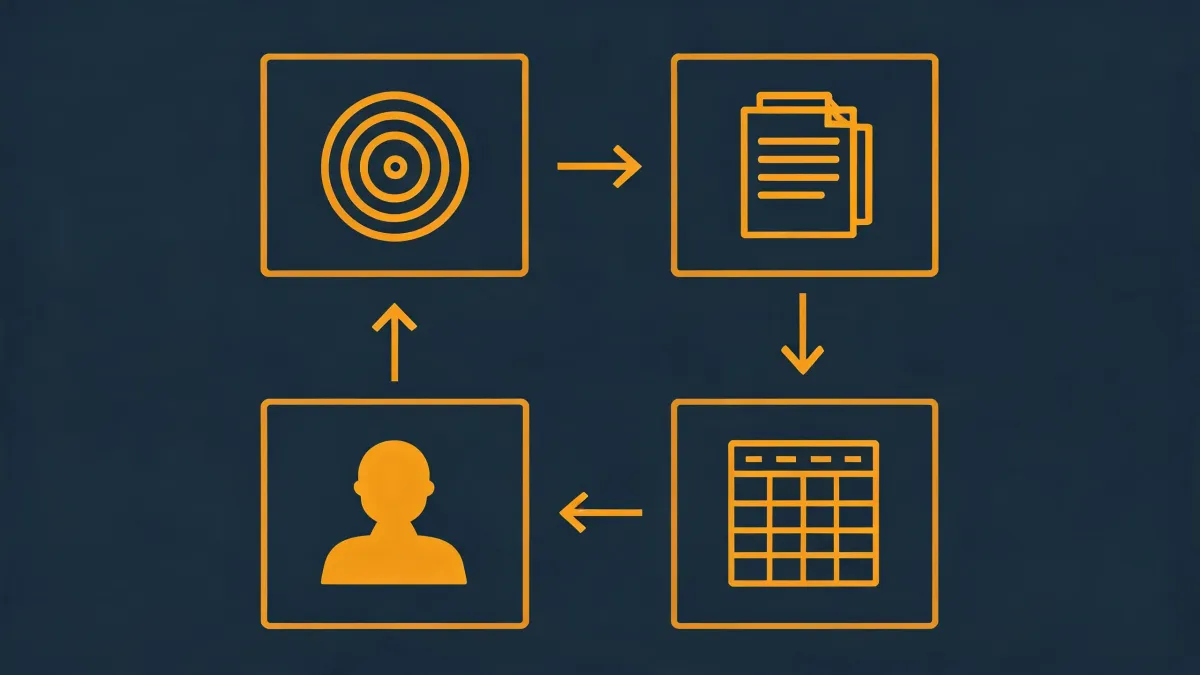
When I say Okki-Go for GTM engineers, I mean the API is a decision layer. A GTM engineer's job is to make the data pipeline visible: which list is clean, which record is verified, and which one needs judgment. My flow looks like this: build a target list in Sales Navigator, export names with company URLs, normalize the domains, send each person to Okki-Go, verify the response, and then pass only confirmed records to the SDR campaign.
Okki-Go's waterfall enrichment is the mechanism behind that decision layer. It checks format, then domain, then mailbox status. If a record is still ambiguous, human-in-the-loop review is better than returning a fabricated address. Okki-Go also adds intent signals, so the final queue can be ordered by real email validity and current buying context.
The mistake that created our 50-row test rule
This isn't theory. In May 2023, I had two hours to load 5,000 leads from LinkedIn Sales Navigator into an outbound sequence. Normally I would run a 50-row test and inspect the output. There was no time, so I checked five rows and approved the rest. The integration returned 4,427 email addresses. It felt like success.
Then the sequence started, and I kept second-guessing myself. Had the finder really checked the domain? The answer came as a 34% bounce rate after 1,700 emails. We had to suppress domains, clean lists, and rebuild the campaign. The direct cost was about $640 in tooling plus a full day of cleanup. The indirect cost was trust in our data.
That was not an Okki-Go failure; it was an older pipeline that treated found and verified as the same thing. The distinction is the lesson. 5 minutes of verification beats 5 days of correction. Once we adopted that rule, we caught 47 potential email disasters over the next 18 months.
When name and domain are still not enough
The simple rule works for most records, but not every record. Add fields when the data has ambiguity:
- Duplicate names at the same company. John Smith at a large enterprise is a real problem. If the finder returns a match, confirm it with a LinkedIn profile URL.
- Multiple domains after an acquisition. The parent company domain may not be the domain on the person's mailbox. Use the original company domain or a source URL.
- No company email exists. If the contact uses a personal address for business, there is no corporate email to find. No professional email finder can invent a mailbox that doesn't exist.
Okki-Go is not a replacement for Sales Navigator, and it is not a lead sourcing tool. It is the resolution layer between the leads you have found and the messages you plan to send. If you don't know the target person's name, an email finder cannot solve that. First identify the person, then enrich them.
One more note for the checklist: per the FTC's CAN-SPAM Rule (ftc.gov), commercial email cannot contain materially false or misleading header information and must include a working opt-out. Verification answers whether a mailbox exists; compliance answers whether the message meets the sending requirements. Keep source and verification status for every record so your team can explain where an address came from and why it was approved.