I get why reverse email lookup caught your attention. You've got a spreadsheet full of addresses from event signups, LinkedIn connections, maybe an old list that's been passed around the team longer than anyone remembers. The names are blank. The LinkedIn profiles are hidden. And your outreach feels like shouting into a canyon and hearing only your own echo.
Reverse email lookup sounds like the answer to that feeling. Paste an address, get a name, a title, a company, a profile URL. Cold email starts to feel less like throwing darts blindfolded.
It's a nice promise. But after evaluating sales tools from the buyer's side for the better part of five years, I've learned that the answer to "should we use reverse email lookup?" is not a universal yes.
It depends. Not in a cop-out way—genuinely, on your team size, your weekly volume, and what you'll do with the data once you find it. I'll walk you through the three situations I commonly see: small teams just starting outbound, scaling teams running high-volume prospecting, and teams in regulated industries where compliance rules everything.
What Is Reverse Email Lookup, Really?
If you're new to the term: reverse email lookup is the process of identifying the person behind an email address. Most sales tools work in one direction—you search for "VP of Sales at Acme Corp" and the tool returns an email. Reverse lookup flips that. You feed in [email protected], and the tool matches it against its databases, returning the person's full name, job title, company size, LinkedIn profile, sometimes a direct phone number.
It's called "reverse" because it's the opposite of normal lead-gen. Instead of profile → email, it goes email → profile.
The use case is straightforward: you have raw addresses from webinar signups, content downloads, or event scans, but you have no idea who these people are or whether they're worth contacting. Reverse lookup gives you the context to decide.
Scenario A: You're a Small Team (1–3 SDRs) Just Starting Outbound
Here's the advice you probably don't want: don't buy a dedicated reverse email lookup tool yet.
A tool feels like progress. It feels like investing in the future. But I've watched this play out enough times to know where it ends. A small team touching fewer than a hundred addresses per week can get 80% of the value from free browser extensions and a shared spreadsheet. Hunter's free tier covers a surprising amount of ground. SignalHire's Chrome extension works fine for quick lookups. Thirty seconds of manual LinkedIn cross-checking gives you the same context you'd buy with a $99/monthAPI subscription.
The bigger problem with a standalone tool at this stage: it gives you data with no home. Your reps copy enrichments into a Google Sheet. The sheet goes stale in two weeks. Nobody updates it, and you keep paying for data your team no longer trusts.
Looking back, I should have followed that instinct with our own team. We bought a mid-tier lookup plan early because we were afraid of being left behind if volume spiked. The volume spike didn't come for six months. We used maybe 10% of the credits—actually, closer to 7%, I'd have to dig through our old invoices—while the subscription renewed quietly each month. That wasn't a tool problem. It was a timing problem.
What I'd suggest instead: pick a free plan, build your manual workflow, and track one honest metric—how many enriched contacts actually turn into replies. The moment that number starts to justify automation, you'll know it's time for Scenario B.
And if a vendor treats your small plan like a nuisance, walk away. A small order is still an order. The vendors who took us seriously when we needed 1,000 credits are the ones we kept when our budget grew. Small doesn't mean unimportant—it means potential.
Scenario B: You're Scaling (4–15 SDRs, 500+ Emails Per Week)
This is where reverse email lookup earns its keep. But here's the counter-intuitive part: I'd still tell you to hold off on buying a standalone lookup tool, even at this volume.
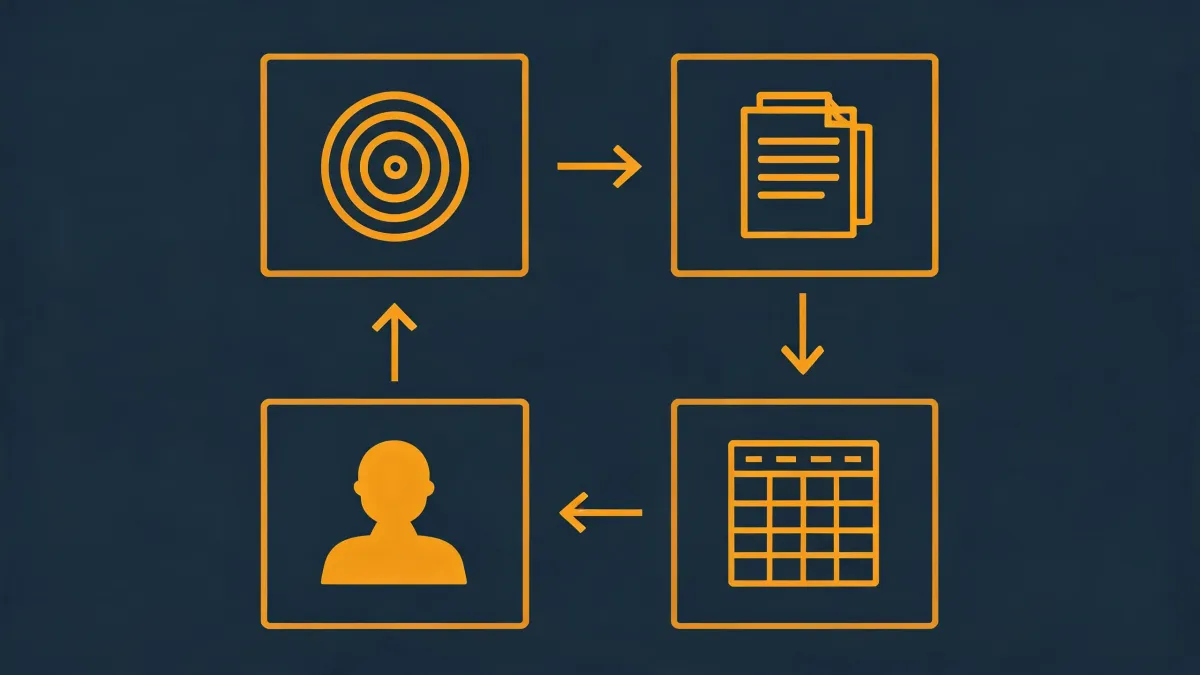
Because the lookup itself is not the value. The value is what happens after the lookup—how the data moves, where it lands, and whether it triggers the next action. If your B2B lead generation engine depends on enrichment, you want the enrichment connected to the thing that uses it, not sitting in a silo that has to be exported, imported, and reconciled every week.
Every hour your SDR spends copying enriched data out of an email lookup tool and into the CRM is an hour they're not sending a personalized follow-up. Fifteen minutes per rep per day—a conservative estimate if they're doing lookups in bulk—adds up to 5–8 hours per rep per week. That's a hidden headcount tax.
This is where a unified platform makes sense. I've spent a fair share of my own time evaluating sales automation software from the buying side, and the approach I keep coming back to is an integrated GTM stack—unify-gtm, to name one—where reverse email lookup, data enrichment, and outreach automation share the same workflow. An address goes in. Enrichment runs. The contact lands in the CRM with account data attached. The sequence triggers. Nobody touches it in between. For a concrete look, the unifygtm.com site walks through this exact data flow.
Revops teams using AI-driven data enrichment see the difference quickly: data prep becomes a background function instead of a manual chore. That distinction matters when you're doing hundreds of lookups a week rather than dozens.
One practical caution: ask how vendors verify their data. The "verified" badge on every tool's homepage (which, honestly, loses meaning once you realize all competitors use the same word) should come with an explanation. Per FTC advertising guidelines, claims like "verified email data" need to be substantiated with evidence. A vendor who can't explain their verification method—but confidently quotes a 90%+ deliverability rate—should make you suspicious.
Scenario C: You're in a Regulated Industry or Enterprise Procurement
If your industry is finance, healthcare, law, or anything else where personal data triggers compliance obligations, the rules change. Not because reverse lookup tools are bad, but because the data itself is sensitive.
I'm not a data privacy lawyer, so I can't speak to the specifics of GDPR, CCPA, or industry regulations. What I can tell you from a procurement perspective is this: involve IT and legal before you test a tool, not after. Shadow IT is tempting. A rep with a company card and a free trial is only a few clicks away from uploading a list of healthcare contacts into an unapproved platform. That's exactly how compliance incidents start.
This is also where data retention becomes a real question. Does the tool let you delete data on request? Can you export everything when a contract ends? What happens if a prospect asks how you got their address? These aren't hypotheticals—they're standard items on our vendor review checklist now. Don't hold me to the exact date, but I believe we standardized that checklist around 2024. It made our evaluation process slower in the best way.
In this category, an established platform with a completed security questionnaire and a clear data processing agreement will beat a cheaper point tool every single time. Reliability over price.
How to Figure Out Which Scenario You're In
If you're still unsure, run yourself through these three questions:
- How many SDRs does your team have? 1–3 means Scenario A. 4–15 means Scenario B. 15+ with a compliance layer means Scenario C.
- How many email addresses do you enrich per week? Under 100 means manual workflows are fine. 100–500 means you're on the edge. 500+ means automate the process.
- Who approves your sales tools? If the revenue team decides alone, you're in A or B. If IT or legal needs to sign off, compliance jumps to the top of your priority list.
Answer honestly, even if the honest answer feels less impressive. I've watched teams inflate their "scale" numbers to justify a bigger purchase, and it never ends well. Buy for the stage you're in now, not the stage you're hoping to reach next quarter.
The Bottom Line
Reverse email lookup isn't a feature. It's a workflow. And the question isn't "should we use it?"—most B2B teams eventually should.
The real question is whether your team is ready to use the data once it's found.
Small team? Use free tools, build your process, and don't let FOMO talk you into a subscription you don't need.
Scaling team? Move to a unified GTM platform where enrichment, automation, and outreach run in the same place. That's where tools like unify-gtm make the difference—no matter which specific platform you ultimately choose.
Regulated or enterprise team? Get your compliance people in the room early and pick vendors that can survive a serious security review.
Match the tool to your actual stage, and the right choice becomes clear.