-
When revenue operations teams evaluate B2B contact data solutions, what should actually be on the checklist?
-
How much should I actually care about bounce rate?
-
Does CRM enrichment really save time, or does it just sound good in a pitch?
-
LinkedIn automation — worth it, or is it just a fast track to getting accounts restricted?
-
What does an okki go first prospecting workflow actually look like?
-
Why does the cheapest contact data usually end up the most expensive?
-
What should I ask a vendor before signing anything?
Five years running revenue operations at B2B SaaS companies means I've been the person called when a quarter is eleven days from ending and the pipeline is a third short. I've handled 200+ last-minute pipeline scrambles, including same-day sequence launches for enterprise accounts that had already been promised a meeting. That's my angle here.
Below are the seven questions I actually get from RevOps and SDR leaders when they're comparing B2B contact data solutions — plus the answers I give them, including the parts they don't love hearing.
When revenue operations teams evaluate B2B contact data solutions, what should actually be on the checklist?
Not the email verification percentage. Almost everyone clears that bar now, or at least claims to. What you're actually comparing:
- Coverage against your real ICP, not the demo ICP
- Freshness — a verified email from 18 months ago is a coin flip
- How enrichment writes back into your existing CRM records
- Compliance posture (GDPR, CAN-SPAM, and whether there's an actual SOC 2 Type II report or just a badge)
- Cost per contactable record, not cost per record
Coverage, freshness, cost per contactable record. In that order. Most comparison articles put freshness fourth or fifth, which is why teams keep buying big lists that go stale before the sequence launches.
It took me about two years and four different data tools to understand that verification accuracy was never the real problem. Rot was.
How much should I actually care about bounce rate?
A lot, and more than you did two years ago. Google and Yahoo's bulk sender requirements, which took effect in February 2024, turned bounce rate from an annoyance into a deliverability switch. A new sending domain that keeps a hard bounce rate above 2% gets throttled, and you don't always get a clean notice about it — you just notice that inbox placement dropped.
Two follow-up questions matter more than the headline number: how often do you re-verify? and what counts as a bounce on your side?
Look, I'm not saying budget data vendors are always bad. I'm saying they're riskier, and the risk compounds. If I remember correctly, on one cheap list we pushed about 12% hard bounces in the first quarter — the savings were gone in under three weeks of re-warming the domain.
Does CRM enrichment really save time, or does it just sound good in a pitch?
It saves time, but not where you'd expect. The savings aren't mainly on the SDR's screen (though they benefit). They're in routing. Most teams run routing rules against stale records, leads get mis-assigned, and then someone burns twenty minutes figuring out which territory a contact actually belongs to. Fix the underlying record and the whole flow tightens up.
Rough math from our team: an SDR spends 12–15 minutes per contact on manual research. Run that across 2,000 contacts and you're looking at roughly 400 hours — all of it spent opening browser tabs instead of opening conversations. At a fully loaded $35/hour, that's real money, and that's before you count the slow-down cost.
Where CRM enrichment earns its keep is when it keeps working after the first sync. One-time enrichment is a demo. Continuous enrichment is a system.
LinkedIn automation — worth it, or is it just a fast track to getting accounts restricted?
Depends entirely on what you mean. If you mean fully automated connection requests and inbox sequences, you're burning accounts, and you'll find out eventually. If you mean LinkedIn automation with a human approval gate — drafts generated, human reviews, human sends — that works, and it works for a long time.
The ban wave that hit six of our twelve managed accounts in 2023 changed how I think about automation. Six restricted, two permanently locked. Three weeks of outreach gone. We now require human-in-the-loop approval on everything that touches a prospect's inbox, no exceptions. Drafts can be machine-generated. The send button is human.
Side note: if a vendor's pitch is "set it and forget it," that's usually a sign they've never had to appeal a restriction.
What does an okki go first prospecting workflow actually look like?
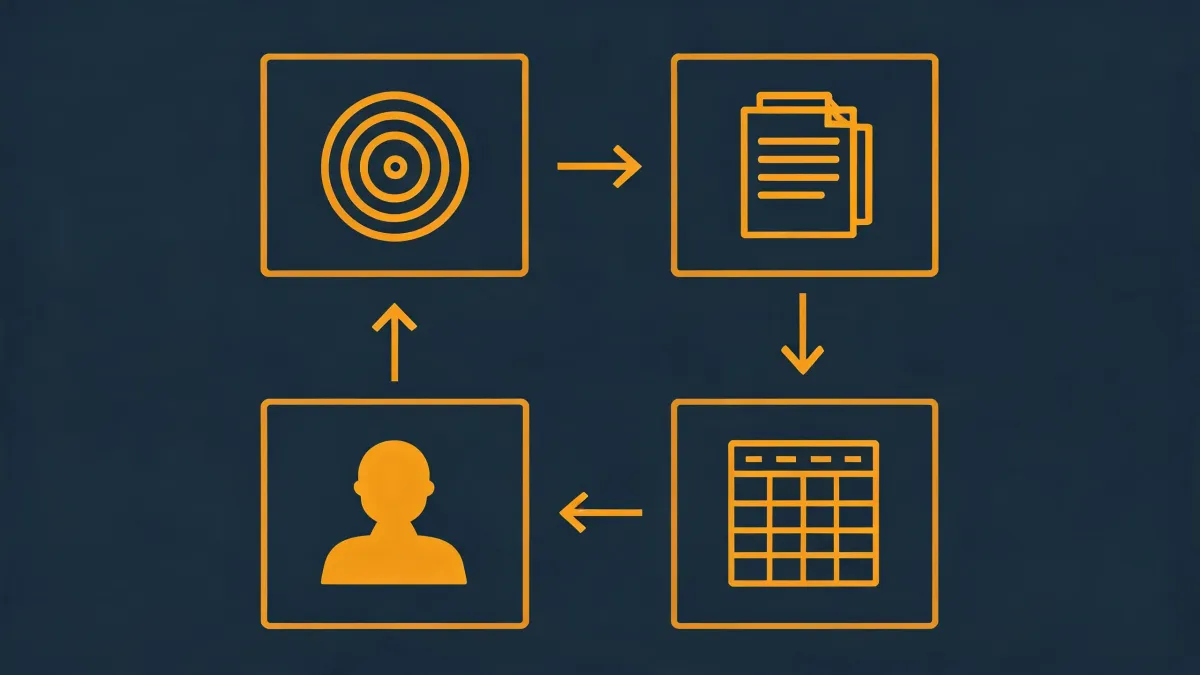
I ran the okki-go demo three times before I believed the sequencing. The first prospecting workflow breaks down like this:
- Build the ICP filter — titles, headcount, tech stack, whatever you actually route on
- Fetch contacts and run them through waterfall enrichment rather than a single source
- Score on intent signals — site visitors, competitor engagement, hiring activity
- Verify email at send time, not at list-build time
- Push verified records into the CRM with enrichment attached
- Launch outreach behind a human approval gate
Step 4 is where most tools quietly fail. They verify the list the day you build it, then the list sits in a database for six weeks, then you send. By then the verification is decoration. The intent layer matters too — a clean record with no signal is just a name.
Why does the cheapest contact data usually end up the most expensive?
Let me walk through the math.
A low-cost vendor quotes you 50,000 contacts. Suppose fifteen percent are bad — 7,500 hard bounces. That hits your domain reputation, you spend four to six weeks warming back up, and you've burned SDR hours dialing records that never had a chance. Add a re-verification pass, a re-build, and the pipeline you didn't book during the recovery window.
Now run the same exercise with a vendor charging roughly four times as much per record. Same 50,000 contacts. Bounce rate around 1.5%, data fresh enough that the emails actually land. The quote looked worse. The quarter looked better.
The upside of the cheap option was maybe $8,000 a year in savings. The risk was losing outbound capacity for the exact quarter we needed it most. I kept asking myself: is $8,000 worth betting a quarter's pipeline on? From experience, in about 60% of the projects I've managed, the lowest quote ended up costing more.
That's not because cheap vendors are dishonest. It's because the hidden costs — re-verification fees, seat charges, overage billing, reprint-style rework on the SDR side — never show up on the quote sheet.
What should I ask a vendor before signing anything?
Five questions. Ask them in this order and listen for whether the answers are specific or rehearsed.
- What's your compliance framework, and can I see the audit report?
- What's your data freshness guarantee, and how is it measured?
- Is enrichment single-source or waterfall, and how do you handle conflicts between sources?
- When you write into my CRM, do you overwrite existing populated fields, or only fill gaps?
- If I leave, can I export enriched records with all the appended fields intact?
That fourth question is the one teams discover too late. Silent field overwrites during enrichment are real, and they'll quietly destroy verified data you already paid for. Ask now, not at renewal.