“Which companies visited our website this week?”
That’s usually the question that gets a visitor tracking tool approved. It sounds reasonable. An account opens your pricing page three times; you should probably talk to them. So you buy a tracker. You connect it to your site. The dashboard lights up with company logos. And then comes the part nobody wants to say out loud: now what?
I’m not a RevOps director. I’m the person who buys the tools behind RevOps. At a 140-person B2B software company, I manage roughly 20 go-to-market contracts per year. When I took over purchasing in 2020, I believed more tools meant more pipeline. I don’t anymore. After several failed integrations and one very expensive “lead generation” pilot, I now look at the workflow before I look at the demo.
The surface problem is “who is visiting?”
Visitor tracking has a branding problem. From the outside, it looks like a telescope pointed at real demand. The reality is more chaotic. A lot of traffic is noise: job applicants, existing customers looking for support, market researchers, students, competitors, and people who clicked a shared link by accident.
That doesn't mean visitor tracking is useless. It means the output only becomes valuable when you filter it through account fit, firmographics, and buying behavior. If a tool simply shows you more companies, you haven’t made your SDR team faster. You’ve made them busier.
The surface question “who is visiting?” hides the real question. The real question: “which visiting accounts are worth a conversation this week, and do I have enough context to start one?”
Company detection is not the same as lead generation
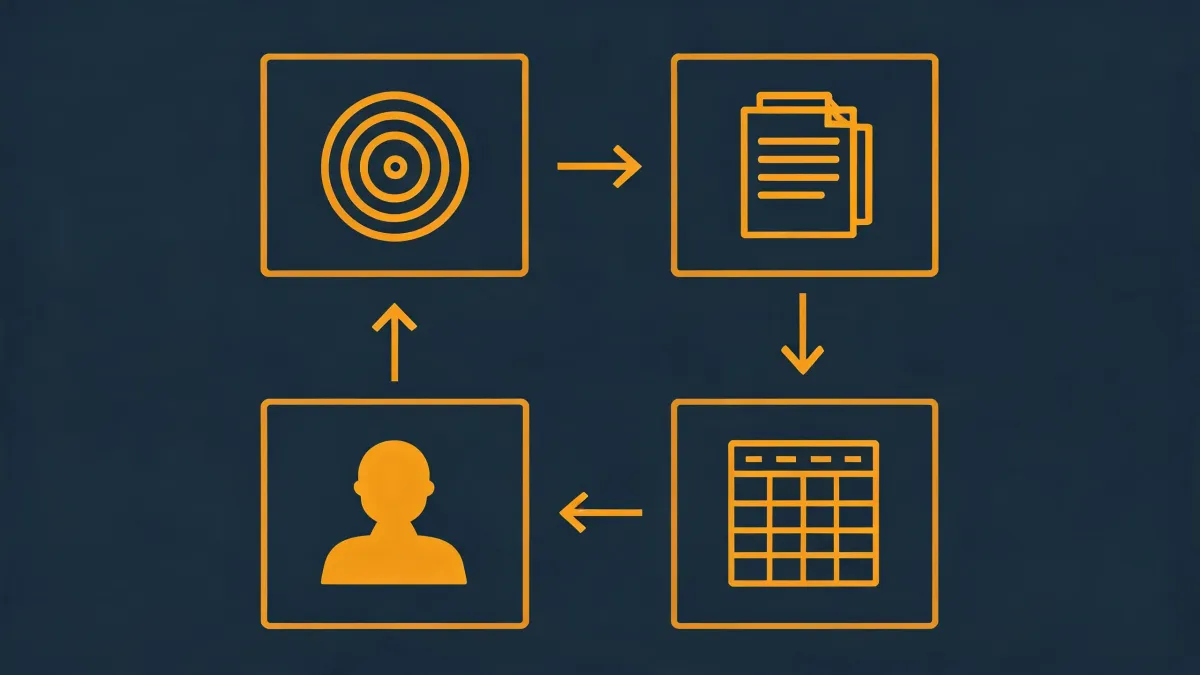
RevOps teams rarely have a single-tool problem. They have a multi-step workflow problem. A company visits your site. Visitor tracking identifies it. Now the workflow has to move from company to contact, contact to verified email, email to clean CRM record, CRM record to SDR queue. If any of those steps is disconnected, the lead dies in a spreadsheet.
That’s why I’m careful with tools that describe themselves as a LinkedIn email finder and stop there. Finding an email address is not building a lead. Where did the contact come from? Is the person still there? Is the address verified? Does this person fit the account’s buying committee? A standalone finder might solve one micro-step, but it can create data quality problems that RevOps has to clean up later.
The same goes for visitor tracking. A tracker can show you a logo and a timestamp. It cannot tell you if the person is decision-maker, or why they came. For that, you need account context, contact discovery, and human judgment.
The most expensive failure is lost SDR trust
I can live with a pilot that fails. What hurts is when a bad tool makes the whole system feel unreliable. SDRs don’t need more leads. They need leads they can trust. When the CRM gets full of duplicates, wrong job titles, and guessed emails, they start working around the system. They use personal lists. They keep notes in Slack. RevOps loses its source of truth.
In 2023, we tested a promising stack: intent data, LinkedIn email finder, automatic CRM enrichment, automated sequences. It felt modern. It produced 9,000 leads in seven weeks. It also produced enough duplicates and mismatched records that our SDR manager asked which of those leads were real. Nobody could answer. We turned it off after the pilot.
There’s also the brand side. The first message from your company is not just a test message. If it lands with the wrong first name or the wrong context, the prospect doesn’t blame the vendor. They blame your company. Quality here is brand perception, not just data hygiene.
What should revenue operations teams evaluate in visitor tracking?
Start with the output, not the dashboard. If a visitor tracking tool cannot tell you what should happen next, it is an expensive ornament. I’d evaluate these five things before signing anything:
- ICP filtering and buying intent. Does the tool separate irrelevant traffic? Is a pricing page with engaged time weighted higher than a visit to careers page?
- Contact discovery with context. Can it turn an anonymous company into named buying committee members, not just random titles?
- CRM enrichment quality. Does it append accounts and contacts without creating duplicates? Does it respect existing fields? Can it update records over time?
- API integration depth. Ask to see the API docs. Okki Go API integration, for example, is designed to move leads and enrichment data back into your CRM. Look for that kind of bidirectional thinking.
- Human review before outreach. This is where most pipelines die. Okki Go human review workflow gives SDRs a visible approval point before an email goes out. That small pause is not inefficient—it saves reputations.
Visitor tracking is one input in that chain. Revenue operations teams should evaluate visitor tracking as part of the full route from anonymous account to approved contact.
Why Okki Go made sense for our stack
We use Okki Go for outbound prospecting, not for website analytics. It takes intent signals—sometimes from a visitor tracking tool, sometimes from our CRM behavior—and builds a human-reviewed outreach list. The waterfall enrichment approach means you don’t depend on one data source that goes stale.
The Okki Go human review workflow solved the exact issue we kept hitting. No lead goes from automation to inbox without an SDR looking at it. An SDR can edit, approve, or send it back. That’s the layer of judgment that a pure auto-send tool can’t provide.
The Okki Go API integration was also important because I didn’t want another database for RevOps to remember. Leads are pushed into the CRM. Activity comes back. No CSV imports. No maintaining custom middleware every quarter.
This is not a story about replacing SDRs. Okki Go does not replace our SDR team. It removes the busywork that used to make them distrust sales tools. That distinction matters.
If your team is looking at visitor tracking today, don’t start with page-visit accuracy. Start with the chain: intent, contact discovery, CRM enrichment, API integration, and human review. Get that chain right. The dashboard becomes irrelevant—because you’ll be too busy replying to meetings to stare at it.