I'm not a marketing theorist. I'm the person you call when the outbound pipeline is on fire and the revenue target is 72 hours away. In the last two years, I've triaged 47 rush demand-generation projects for B2B clients, including a same-day turnaround for a home-services company whose lead vendor failed a week before a major campaign. Missing that deadline would have triggered a $50,000 penalty clause.
The way I see it, most sales teams are still treating buying intent signals as if they were monthly reports. They collect them, label them, drop them in a CRM, and hope a human SDR will call soon. That framework is from 2019. It is over. In 2025, a buying intent signal is not a report. It's a rush order.
Here's my argument: agent-native prospecting—where AI agents monitor intent data, trigger outreach, and pass warm conversations to humans—is not a futuristic ambition. It's the only realistic way to act on intent before the window closes.
The 48-Hour Test That Changed My View
In March 2024, a regional HVAC company came to us in a panic. Over the weekend, their website had recorded a spike in quote requests—roughly 40 people looking for emergency heat pump replacement. Their normal process was to download the leads Monday morning, work through them, and then pass the qualified ones to an estimator. By Monday, most of those homeowners had already gotten calls from three competitors. We were starting at a disadvantage, not because we had no leads, but because we had waited.
So we set up an AI phone agent to handle the overflow and log the buying intent signal as calls came in. It asked simple qualification questions (service needed, property type, time window), routed urgent cases to a human estimator if one was available, and booked a morning call if not. We also ran a separate, simpler sequence for the older form fills—email only, with no phone calls.
When I compared the two sets side by side at the end of the week, the result was stark. The AI phone agent handled 12 after-hours calls over the weekend. Four of those became booked estimates. The 31 older form fills, contacted by email only, generated one. Same company, same market, same services. The difference was speed and channel.
Now, I'm not saying you'll get the same numbers—different markets behave differently. But from my perspective, this claim became impossible to ignore: the intent signal itself is perishable. Every hour you wait reduces its value.
Intent Data Has a Shelf Life
Buying intent signal isn't just a person visiting your pricing page, or a prospect who opens three emails in a row. It's a time-stamped piece of behavior that tells you someone is moving toward a decision. The closer to the moment of action, the more valuable it is.
Don't hold me to the exact number—our internal data is messy—but we've seen a significant difference between responding within 60 minutes and responding the next day. Roughly speaking, the same message gets several times more replies when it goes out within the hour. Even a two-hour delay feels like an eternity in outbound B2B.
That's why I'd argue that 'generate leads' is the wrong goal. The real goal is to generate leads with intent attached, and then act on them while the context is still fresh.
This is where Unify-GTM fits into our stack. Unify-GTM's automation software outbound tool unifies signals from website visits, LinkedIn interactions, email replies, and calls into one timeline, so an AI agent—not a tired human—can spot the pattern and trigger the next step. It's not magic. It's basically a very disciplined triage nurse for your pipeline.
Agent-native prospecting, meaning the workflow is designed so AI agents handle the first monitoring and outreach layers, feels like a shift. But the fundamentals haven't changed since I started in sales ops: respond quickly, be relevant, follow up consistently. What changed is the scale. No human can sit and watch 50 intent signals from three channels and call each one in under an hour. 'Human touch' is often a speed bottleneck.
Why AI Phone Agents Matter for Home Services
I know 'AI phone agents for home services' sounds like vendor hype when you read it in a search result. But when you've spent time on an emergency sales floor, you realize how much revenue hides in after-hours calls.
Home services is the clearest example. A homeowner with a broken furnace doesn't care about your Monday morning reporting. They are searching for a repair at 9 PM, they call the first three companies that appear on Google, and whoever answers wins the chance to quote. If no one answers, they move to the next listing.
An AI phone agent is not there to close a deal. In our experience, its job is to answer, capture the buying intent signal, screen for urgency, and get the right human involved before the caller hangs up. That's why Unify-GTM's AI phone agents for home services are designed around after-hours triage: they collect service details, send SMS options, and book a time slot with a live service manager if necessary.
I should be clear about the boundary here. Per FTC advertising guidelines (ftc.gov), if you claim you're available 24/7 or that calls will be returned immediately, you need to actually build a system that does that. An AI agent that gets every detail wrong is worse than no agent. This is why I'm careful to say 'works for us' rather than 'guaranteed to work for you.' Context matters, and a home-services provider in a small niche will need different scripts than a national franchise.
How Does LinkedIn Automation Free Trial Fit Into an Agent-Native Prospecting Workflow?
The most common question we get from teams evaluating Unify-GTM is something like: 'How does LinkedIn automation free trial fit into an agent-native prospecting workflow?'
Short answer: LinkedIn automation is a channel, not the strategy. In our workflow, it's the connective-tissue layer in the middle.
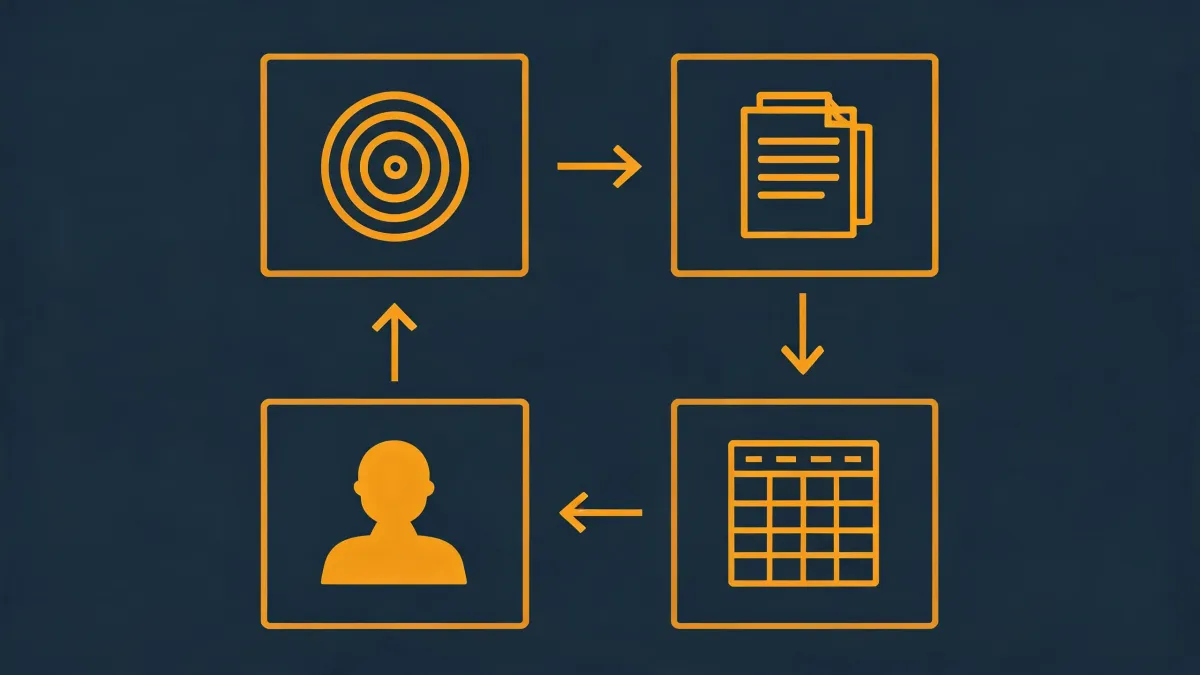
- AI agents monitor a buying intent signal—a site visit, an email reply, or a LinkedIn interaction.
- They enrich the lead with firmographic data and evaluate the context.
- They trigger a LinkedIn connection request or a direct message sequence, using copy approved by a human.
- Any reply gets logged in Unify-GTM's timeline, which may trigger a phone agent call or a next-step email.
To be fair, direct mail still works for certain accounts. But the cost per touch keeps rising—USPS rate changes in January 2025 put a one-ounce First-Class letter at $0.73, and that's before list and printing costs. An automated, permission-aware LinkedIn message is cheaper to scale, if you do it responsibly.
That's why a LinkedIn automation free trial can make sense for B2B teams: it lets you test how a sequence feels without committing to a full annual contract. But be honest about what you're testing. If you connect a free trial to a random list and blast out connection requests, you're burning a channel. Try it with 50 or 100 leads where you already have a weak intent signal, and the context will be better.
And yes, there are compliance considerations. LinkedIn's rules matter, and I'm not a lawyer. I can only tell you that we use automation to support outbound, not to spam thousands of strangers. 'Automation' shouldn't be code for 'unaccountable.'
What About the Human Touch Objection?
I get why people are skeptical. 'AI will make our outreach feel cheap.' 'Intent data is overhyped.' 'We don't want to become another automated spammer.' These are reasonable concerns. To be fair, a badly implemented AI agent is exactly that.
But the alternative isn't 'human-only sales.' It's 'humans-only after the leads have gone cold.' A one-day-old lead still has some warmth. A one-week-old lead is just a name that a competitor may have already converted. That's not an argument against human connection. It's an argument for connecting with the right human, at the right time, with the right context. AI agents help make that possible.
Here's my honest boundary: this approach worked for us in mid-market B2B and home-services scenarios, where the volume is large and the buying window is short. If you're selling $2M enterprise contracts with a 12-month cycle, the calculus might be different. I can only speak to what I've seen.
Rush Orders Win
Back in 2020, a buyer's intent signal was rare. You could wait a month and still win. In 2025, that's fantasy. The same signals are visible to your competitors, and the window for action is measured in hours, not weeks. I used to think of 'generate leads' as a quantity game; now I treat it as an emergency-response game.
So my position hasn't softened: a buying intent signal is a rush order. If you don't act like it, someone else will. Agent-native prospecting—with Unify-GTM handling the unification, AI phone agents for after-hours demand, and LinkedIn automation as one of the channels in between—is how you turn that rush order into a delivered project.
If you're not sure where to start, the free trial is a fine place to experiment. Just don't treat it as a lead-generation trick. It's part of a system. The old playbooks are outdated, but the core principle—speed plus context—is going to win. (Note to self: I should actually write up that HVAC case study before I forget the numbers.)