- What I Actually Compare When I See 'Unify GTM Pricing'
-
What a LinkedIn Automation Free Trial Actually Shows You
-
Where AI Digital Workers for Sales Earn Their Keep
-
How Can a B2B Sales Team Identify Website Visitors? Start With Intent, Not IPs
-
Contact Data Providers: The Expense That Rarely Stays Quiet
-
When I Would Say No
-
The Fine Print That Matters
Here's the short version: if you're evaluating Unify GTM, the pricing page is not the problem. The problem is the 30-50% of total cost that sits outside the subscription. I've managed sales tech budgets at a 40-person B2B company for six years and compared more than 30 vendors. Unify GTM is one of the strongest AI digital worker platforms for sales teams that already know who they want to sell to. But if your data is messy and your team expects it to run on its own, the real cost will be wasted credits, bad sender reputation, and a tool that looks like the problem when the data was the problem all along.
Let me state my bias: I'm a procurement manager. I don't care about 'game-changing tech.' I care about whether the invoice produces pipeline. So when I tested Unify GTM, I read the contract as carefully as the sales deck.
What I Actually Compare When I See 'Unify GTM Pricing'
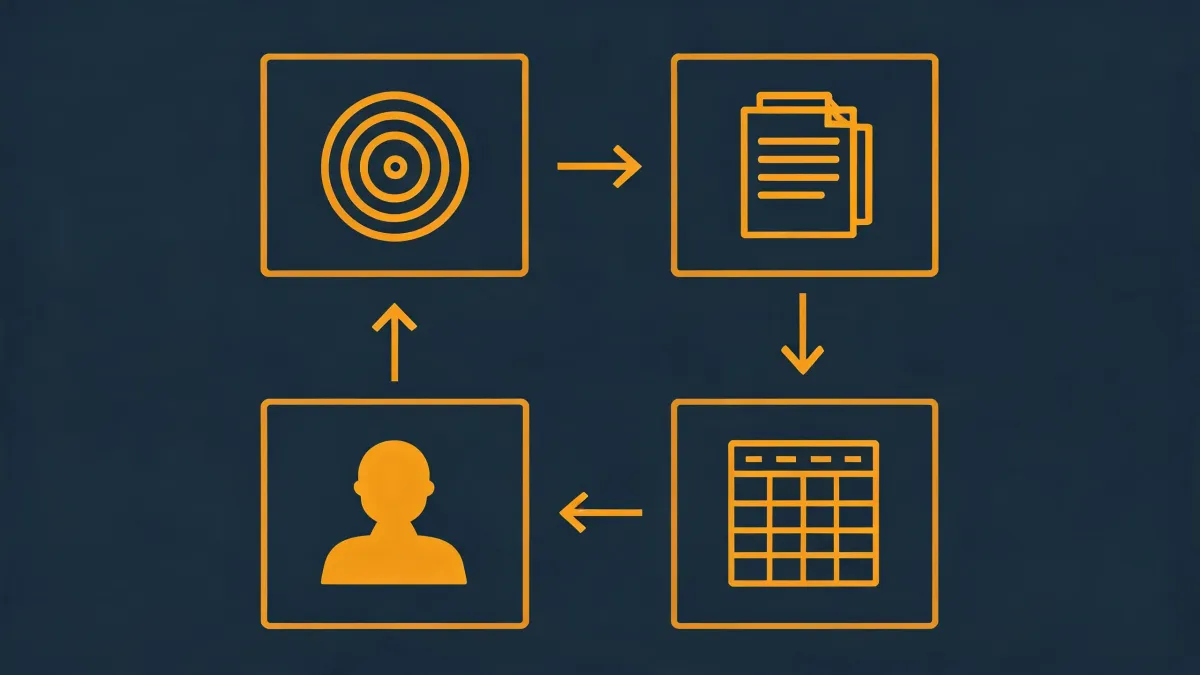
Search for 'unify-gtm,' 'unify gtm ai digital workers for sales,' or 'unify gtm pricing' and you'll land on the same platform. I do the same thing. If you've ever compared sales tech quotes, you know the pricing page tells you less than the contract. But after six years of tracking every invoice, I can tell you the number on the pricing page is the starting point, not the answer. When I asked for an itemized quote, the breakdown had five layers:
- Platform seats
- Data credits
- Phone minutes
- LinkedIn safety and compliance controls
- Onboarding and workflow setup
Platform seats were about 60% of the total quote. The rest was data and usage. That's not a bait-and-switch. It's how this category works. If a vendor says 'everything is included,' ask for the limit on 'everything.'
The hidden cost nobody quotes
The largest hidden cost is bad CRM data. A digital worker acts on what you give it. It doesn't know that a contact changed jobs or that a domain expired. I only believed this after ignoring it. We turned on an AI outreach workflow with a list imported from an old trade show, sent 1,400 emails, and watched 19% bounce. We lost sender reputation and burned about $1,200 in credits. The platform got blamed. The data was the problem. So budget time to dedupe, verify, and segment before you go live.
A digital worker doesn't fix a bad list; it scales it.
What a LinkedIn Automation Free Trial Actually Shows You
A LinkedIn automation free trial is useful, but not for the reason people expect. You won't learn if your sender reputation survives 30 days. You will learn whether the workflow feels too aggressive, whether the interface gives you enough control, and whether your team can review messages before they go out. That's worth a lot. But be honest about what a trial cannot prove.
LinkedIn's user agreement prohibits scraping and some automated activity. I'm not a lawyer, but when a vendor says 'we work within LinkedIn's rules,' ask them to put it in writing and explain what happens if an account gets restricted. Use the trial to test one workflow, not three. Pick your highest-intent accounts, run them through the AI sequence, and read every output as if it was your brand.
Where AI Digital Workers for Sales Earn Their Keep
AI digital workers for sales are not magic. They are automated operators that find accounts, enrich contacts, create sequences, send emails, trigger LinkedIn actions, and log everything. The value is consistency and speed. A good SDR might send 50 personalized emails in a week. A digital worker can handle more volume—if the messages are good enough not to hurt you.
That brings me to quality. Your first email is your brand. If a prospect receives a message with the wrong company name, they don't think 'bad AI.' They think 'this company doesn't care.' Gartner has predicted that a growing share of outbound messages will be synthetically generated; one often-cited figure is 30% by 2026. When everyone has volume, the differentiator is relevance and review. A platform that lets you review before sending is usually worth more than one that promises full autonomy.
How Can a B2B Sales Team Identify Website Visitors? Start With Intent, Not IPs
Short answer: use a combination of reverse IP identification, firmographic matching, and contact enrichment. You see which companies visit your pricing page, match those accounts to real people through a contact data provider, then let an AI digital worker start outreach based on that trigger.
The common mistake is buying an IP lookup tool by itself. IP lookup shows 'someone from this company visited.' It doesn't show who the person is or whether they have buying intent. The better sequence is: identify account, score intent, enrich contacts, send a message that references the visit. Visitors to your pricing page usually deserve more attention than visitors to your blog. If your sales team is still manually checking website traffic in Google Analytics, that's the bottleneck. Unify GTM can pull the whole flow into one workflow.
Honestly, I'm not sure why so many teams buy IP lookup and stop there. My best guess is that it's the easiest demo to understand. But the real value appears when the visit signal becomes a trigger for a well-written, human-reviewed outreach sequence.
Contact Data Providers: The Expense That Rarely Stays Quiet
Contact data providers are a separate budget line. Many B2B teams already pay for one. The subscription can look pretty reasonable until you hit export limits or pay extra for mobile numbers. When you compare Unify GTM, ask how many data credits are included, what happens when credits are gone, and how good the coverage is on your specific market.
Some teams keep a separate provider and use Unify GTM for the workflow. That can work, but it means your total cost is the sum of both contracts. If you plan to drop a data provider because Unify includes data, test the coverage on 100 of your ideal accounts before you cancel anything.
When I Would Say No
I would say no in three cases:
- If your CRM has no process for updating stages, don't buy it yet. The AI will just scale your confusion.
- If your outbound list is under 100 accounts a month, the tool is overkill. Use the free trial, but don't sign an annual contract.
- If every message has to be hand-written from scratch, AI digital workers will feel like a burden, not a boost.
These are not criticisms of Unify GTM. They're boundary conditions. The tool is built for teams with enough demand to justify automation.
The Fine Print That Matters
Honestly, I'm not sure if LinkedIn automation will be a durable channel. My best guess is that LinkedIn will keep allowing human-in-the-loop tools and keep cutting off fully autonomous behavior. So if you buy, keep a human in the loop.
This was accurate as of early 2025. Pricing and policy change fast, so verify current numbers before you sign. The right decision is not the lowest monthly price. It's the highest return after you multiply it by reality.