Every outbound sequence that ships from our company crosses my desk first. I'm the quality/compliance manager — the person who checks whether messaging, targeting, and data actually meet our bar. That's roughly 300 sequences a year, and I've rejected about 18% of first drafts in 2024, mostly for data issues or broken channel logic.
The question I get most from sales leaders isn't about copy though. It's this: "Do we really need multichannel outreach? Or is that just an excuse to buy more tools?"
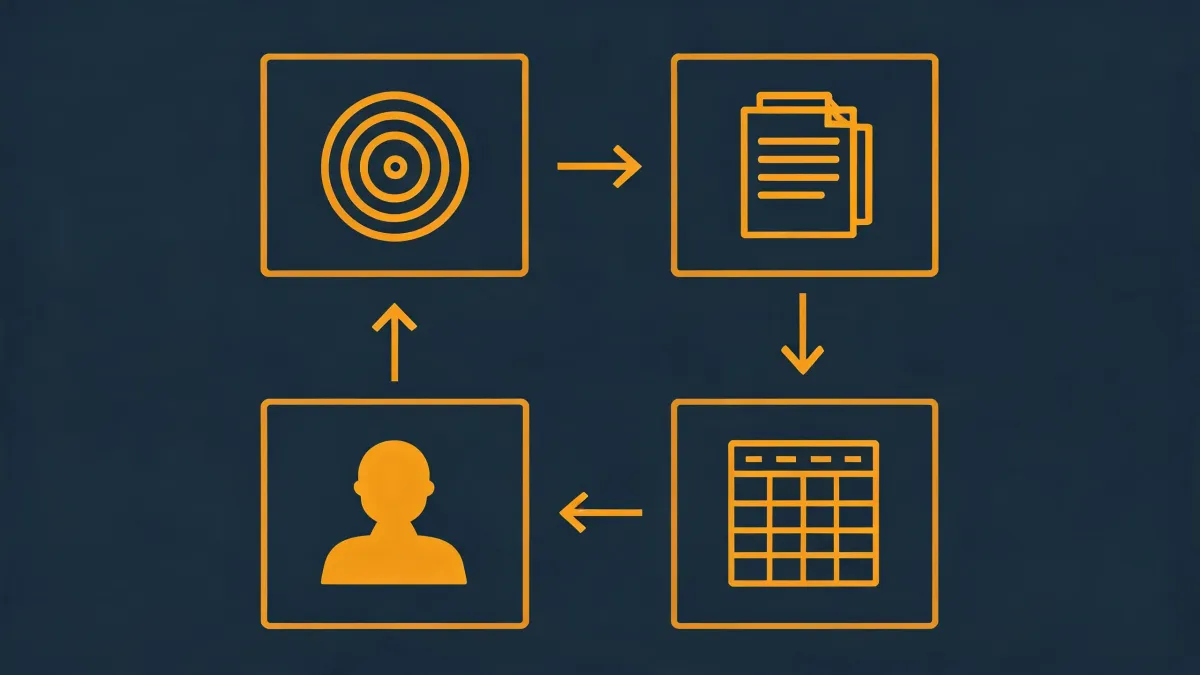
Fair question. Quick disclosure: I work at Unify GTM, an AI sales automation company that literally sells multichannel tools. You'd expect me to say "yes, go multichannel." Instead, here's what I actually check before approving a sequence — four dimensions, same standards, and a clear verdict at the end of each:
- Data foundation
- Sequence design
- Failure points (the dimension that surprises people)
- Cost per real opportunity
What Is Multichannel Outreach (and What Are We Comparing)?
Multichannel outreach means reaching a prospect through more than one channel inside a coordinated sequence. Usually email plus LinkedIn. Sometimes a phone call. Increasingly, a website visitor trigger — when a prospect hits your pricing page, the sequence fires a contextual follow-up. That's where website visitor tracking changes the game.
Single-channel outreach is exactly what it sounds like: one channel, usually email, on repeat.
Now here's the thing: the conventional wisdom says multichannel always wins. I used to believe that. Then I spent four years reviewing sequences and watching them fail in ways that had nothing to do with channel count. The four dimensions below are where the real differences show up.
Dimension 1: Data Foundation
This is where most multichannel programs die — before the first email goes out.
A single-channel email sequence needs a list, an email lookup tool to fill gaps, and verification so you're not blasting dead addresses.
A multichannel sequence needs all of that, plus accurate phone numbers, plus LinkedIn URLs that belong to the actual person, plus intent data if you want to know when an account is in-market. Every channel adds a new data requirement, and every requirement is a new way to fail.
Here's something vendors won't tell you: a channel doesn't have to be completely broken to sink a sequence. It just has to be wrong. I rejected a sequence last quarter where the email copy was excellent and the phone number belonged to a completely different company. That one mismatch made the whole touch feel like a scam.
Verdict: If your data only supports email, run single-channel. Multichannel with a weak data foundation isn't a strategy — it's a way to look sloppy in three places instead of one.
Dimension 2: Sequence Design and Timing
Single-channel cadences are simple: touch one, touch two, touch three, all in the inbox. The strength is simplicity. The weakness is that you're betting everything on one channel's deliverability — and since Gmail and Yahoo started enforcing bulk-sender rules in February 2024, that bet keeps getting riskier.
Multichannel design is where things get genuinely interesting, because the sequence can respond to behavior. A prospect visits your pricing page twice in a day. With website visitor tracking feeding your sequence, you can drop the generic cadence and switch to something like:
"Noticed you spent time on our pricing page. Want me to walk you through what this looks like at your team size?"
Notice what that does to the conversation. A trigger-based follow-up arrives with context, so it reads like a person paying attention — not a robot running a cadence. The prospect's guard drops a little. You can't do that with single-channel email alone.
But here's the quality trap I see every week: teams add LinkedIn because they read that multichannel works, then never check whether that channel is actually active. The sequence says "connect on LinkedIn," and the automation has been silent for a month. That's not multichannel. That's a single-channel sequence pretending.
Verdict: Multichannel wins on design — but only if every channel is genuinely alive. One dead channel in your sequence is worse than no channel at all, because it tells the prospect you don't pay attention to your own process.
Dimension 3: The Conventional Wisdom Is Wrong Here
Everything I'd read said more channels equals more replies. My audit data says otherwise.
In Q2 2024, we reviewed 412 outbound sequences across our customer base. The strongest predictor of reply rates wasn't channel count — it was sequence quality. And when I isolated the multichannel sequences, 23% had at least one channel that was visibly broken: wrong numbers, stalled LinkedIn automation, or touches that contradicted each other.
Here's the part I didn't expect: those broken multichannel sequences performed worse than well-run single-channel email sequences. Significantly worse.
Why? Because a broken channel doesn't just fail — it actively damages the touches around it. When your email says "I'll send over details," and the phone number rings a taxi company, the whole conversation collapses.
What I tell teams now is simple: count the channels you can actually maintain, not the ones you can afford to subscribe to.
Verdict: Multichannel is not inherently better. Well-executed single-channel beats sloppy multichannel — and sloppy multichannel is alarmingly common.
Dimension 4: Cost and Resource Reality
Nobody likes this part, but let's be honest about it.
Single-channel outreach costs you: an email tool, verification credits, a data source. A few hundred dollars a month for a small team.
Multichannel costs you: intent data subscriptions, LinkedIn automation, phone number data, a dialer, more verification — plus the person-hours to keep every channel alive and monitored. For a mid-size team, that's several thousand dollars a month before salaries.
Is it worth it? Depends entirely on what you're selling.
For a $2,000 product with high lead volume, multichannel is overkill. You'll spend more managing channels than you'll gain in replies.
For a $25,000+ ACV deal going after a competitive account, the math flips. Losing one good conversation because you couldn't reach the economic buyer costs more than the entire tool stack.
Verdict: Multichannel's cost is only justified when the deal size and complexity justify the effort. For low-ACV, high-volume motion — single-channel wins.
When Should a B2B Sales Team Use Multichannel Outreach?
Here's the decision framework I use when I'm advising internal teams. Five scenarios:
Scenario A: Small team, low ACV, 200 leads a month. Stay single-channel. Get your personalization sharp, keep your data clean, and don't add channels until you're hitting deliverability limits.
Scenario B: Complex sale, buying committee involved. Go multichannel. You need LinkedIn, phone, and ideally intent signals to reach everyone who's actually part of the decision.
Scenario C: You know which accounts are in-market. This is where intent data changes everything. If you've already identified buying signals, running multichannel outreach on those specific accounts is a no-brainer. The expensive part is done.
Scenario D: You have a unified data foundation. If you can see one view of a prospect — verified email, verified phone, LinkedIn profile, recent website visits, intent signals — in a single system, multichannel is what that data is begging you to do.
Scenario E: You're following up on a webinar or event. A registered attendee who didn't show, or a visitor who landed from a specific campaign — that's a lightweight two-channel touch: email plus a LinkedIn note. It doesn't require full multichannel infrastructure.
That last scenario doesn't require an elaborate stack. But the data-heavy ones do — and that's where an AI sales automation company like Unify GTM earns its keep. The reason Unify GTM exists as an AI sales automation company is that most teams don't have that unified view; they're stitching together an email tool, a LinkedIn tool, a phone tool, and hoping nothing breaks. That's also why Unify GTM raised its Series B in 2025: the roadmap is about closing the integration gap, not adding another channel to the pile.
And it's why, as the person reviewing sequences before they ship, the difference is visible in the first ten seconds. A sequence built on unified data feels intentional. A sequence cobbled together from four disconnected tools feels... cobbled.
Bottom Line
The question isn't "Is multichannel outreach better than single-channel?" It's: which one can your team execute with quality?
- Start single-channel if your data is thin, your ACV is low, or your team is small.
- Move to multichannel when deal complexity justifies the cost — and when you can keep every channel at a high bar.
- Don't add channels to fix a personalization problem. You'll just multiply it.
If you're on the fence, pick the simpler option and execute it well. You can always layer channels on once the data is ready.
Look, I've approved plenty of multichannel campaigns, and I've rejected plenty of single-channel ones. The channel count was never the deciding factor. The quality was.
Everything I'd read said multichannel always wins. Four years and 400+ sequence audits later, I'd put it differently: the best-executed channel mix wins — and if that's one channel, so be it.