- The Buyer's Dilemma: Point Tools vs. a Unified GTM Platform
-
1. Setup and Maintenance: Four Tools vs. One Workflow
- 2. Data Quality: Where Sales Intelligence Falls Apart
-
3. Multichannel Outreach: LinkedIn, Email, and AI Phone Agents
-
4. Contract and Cost Complexity: The Hidden Admin Burden
-
5. So Which Should You Choose?
The Buyer's Dilemma: Point Tools vs. a Unified GTM Platform
I'm the office administrator for a 40-person B2B company. That means I handle software purchases across departments—roughly $120,000 a year in subscriptions. When our VP of Sales asked me to research sales automation tools, I assumed we'd keep buying separate point tools. More options meant more control, right? After comparing them side by side, I changed my mind.
This isn't a CTO's review. It's a buyer's comparison of two ways to solve the same problem: a stack of separate sales automation tools vs. unified GTM automation software like Unify-GTM. If your team is evaluating "Unify GTM automation software B2B marketing" searches, use this as a decision framework.
I reported to both operations and finance, so I cared about three things: workflow, what we could prove, and how much it cost us in time—not just dollars. Here's what I found.
How I Compared Them
I didn't compare features alone. I compared what it felt like to own, manage, and scale them. Four dimensions stood out:
- Setup and maintenance overhead
- Data quality and company enrichment
- Multichannel outreach: LinkedIn, email, and phone
- Contract and renewal complexity
1. Setup and Maintenance: Four Tools vs. One Workflow
Our old stack was a LinkedIn connection tool, an email automation tool, a phone dialer, and a separate intent data subscription. Each had its own login, billing cycle, and support queue. When I took over purchasing in 2020, I found eleven active subscription accounts. Two were duplicates. One was still paying for a tool we'd cancelled. That's the reality of point tools.
The unified approach was different. With Unify-GTM, there's one platform, one invoice, one place to reset a password. Setup isn't zero work. To be fair, migration was messier than the sales team expected. But it was one project instead of four, and the support team understood the whole workflow—not just a single module.
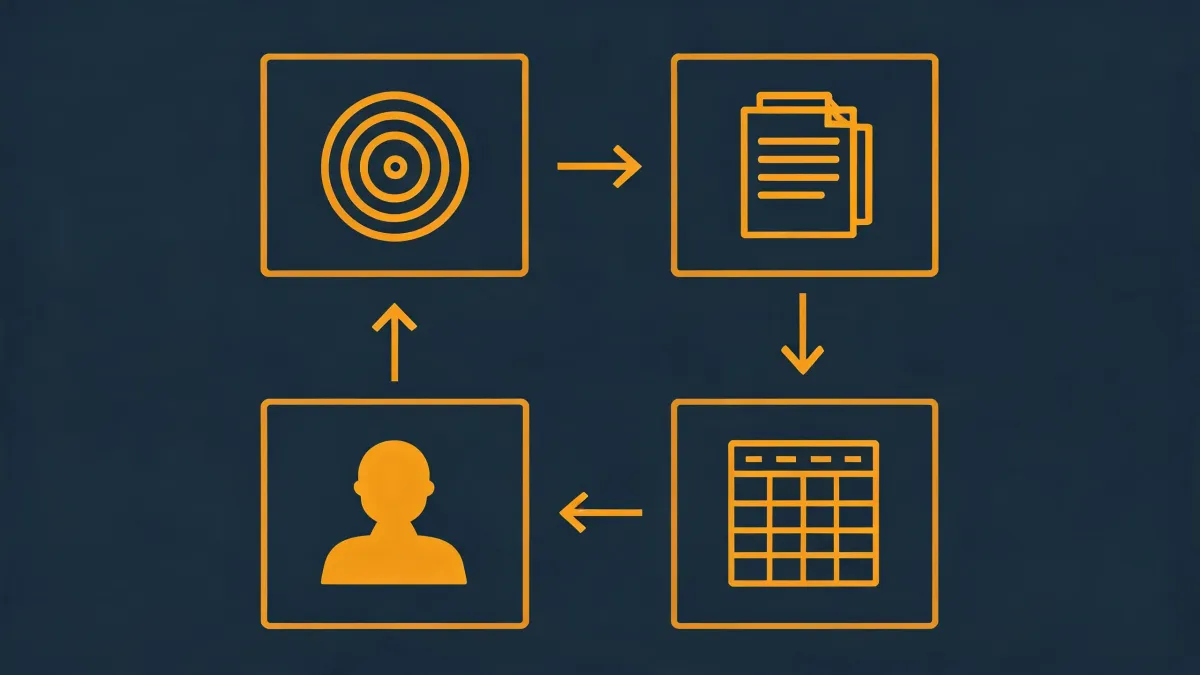
When I compared the point-tool stack and the unified platform side by side, I finally understood why the details matter. The real cost wasn't the monthly fee. It was the time spent moving data between tools. That was the moment I stopped defending the old stack.
2. Data Quality: Where Sales Intelligence Falls Apart
Our reps were spending too long manually looking up companies. That's where company enrichment sales intelligence comes in.
What is company enrichment sales intelligence?
Company enrichment adds firmographic data to a lead record—industry, employee count, revenue, location, technologies used. Sales intelligence takes that enriched data and helps you decide which accounts are worth pursuing. In plain English: enrichment turns a name and an email into a profile you can rank.
When should a B2B sales team use it?
Use it when reps spend more than a few minutes per lead digging through LinkedIn and company websites. Use it when you need to segment accounts by intent signals. Use it when your list is too big for outbound reps to manually qualify. If your list is small and your ideal customer profile is already obvious, you can probably skip it—but most growing B2B teams hit the limit sooner than they expect.
In our old setup, enrichment was a separate step. We exported a CSV, uploaded it to another tool, waited for match rates, then imported it back. It worked. Until someone uploaded old data. Then we were calling companies that had moved, or worse, re-contacting stale contacts.
Unify-GTM keeps enrichment inside the workflow. Intent data sits next to account profiles. That doesn't mean the data is perfect. I don't have hard data on industry-wide match rates, but in my experience, even good vendors get things wrong. You still need a way to flag bad records.
3. Multichannel Outreach: LinkedIn, Email, and AI Phone Agents
The point-tool stack struggled to coordinate channels. Our LinkedIn connection tool didn't know which email addresses had bounced. Our email automation tool didn't know which accounts a rep had already called. So prospects got contacted at the wrong time—or three times in the same afternoon.
With a unified platform, the same record powers LinkedIn connection requests, email automation, and AI phone agents. A rep can see the full engagement history before touching the next account. If the words "Unify GTM AI phone agents" are the reason you're here, they are part of that picture—they handle initial qualification conversations. But no software can guarantee a reply. What matters to me is that the call log sits next to LinkedIn activity and email sends. That's the workflow integration I wanted.
One compliance note: email automation must follow the law. Per FTC guidelines (ftc.gov), commercial emails need a clear opt-out and truthful sender information. That applies to every tool in the stack. I liked that the unified platform made opt-out and consent fields part of the campaign setup, not an afterthought.
4. Contract and Cost Complexity: The Hidden Admin Burden
I'll be honest: point tools can look cheaper on paper. A single-purpose email verifier might cost $90 a month. An enrichment subscription might be $200. But you pay extra in admin work.
One example from our old process: we saved $90 a month by choosing a cheaper email verification add-on. Then our sales reps spent hours scrubbing bounced addresses anyway. The cheap choice wasn't cheap. It brought the problem back through the front door.
When I added up the point-tool contracts, here's what I saw. Five vendors means five renewal dates, five sets of invoice terms, and five support portals. In our 2024 vendor consolidation project, we reduced the sales stack from five subscriptions to two. We kept one niche tool and a unified GTM platform. That made lifecycle management manageable again.
I'm not saying the unified platform had the lowest quote. It didn't. But when I compared total cost of ownership—including integration work, duplicate data cleanup, and the time I spend on accounts payable—the gap nearly disappeared.
5. So Which Should You Choose?
It depends.
Choose a point-tool stack if you have a mature sales operations team, a dedicated integration engineer, and one primary outreach channel. A lean, single-channel team can make point tools work—especially if you already have clean data and stable processes.
Choose a platform like Unify-GTM if you're doing multichannel outreach and your data is messy. That was us. A 40-person company doesn't have an integration engineer. We needed the pipeline to share one brain.
My advice: don't start with "point tools vs. platform." Start with the workflow that's failing. If the answer is "we keep losing data between tools," you already know the direction.
And if you're reading this because you searched for "unify-gtm" or "Unify GTM automation software B2B marketing," ignore the feature lists for a minute. Compare what it's like to own the thing. That's the difference that shows up in the long run.