Some mistakes don’t show up until you’re already explaining them in a post-mortem. I’ve made enough of those in RevOps to keep a running list. This one almost became a post-mortem. We caught it during the platform evaluation, but only because one SDR asked a question I should have asked first.
I’m a RevOps lead, and I’ve personally burned roughly $12,000 on contact data decisions that looked smart at the time. That number isn’t a tool subscription cost. It’s wasted SDR hours, bad email lists, and the cost of rebuilding trust with sales after they stopped believing the data.
It started on a Tuesday in March 2025, during our quarterly pipeline review. Our outbound team was working from a shared “master list” with more than 14,000 rows. I use the quotes because that list was anything but master. It had 312 duplicates, 44 domains pointing to dead mail servers, and one entry for a CFO who had been “active” for nine months after leaving the company. We didn’t need more contacts. We needed a better way to generate leads we could actually work—without hiring a second data team to clean everything.
The messy part is that nobody bought that prospect database in one go. It grew from three different tools, a few imported LinkedIn exports, and a spreadsheet a sales manager had been keeping since 2022. The duplicates were not a surprise. The surprise was how many records still looked perfectly fine on the surface.
That’s when I started looking for a B2B contact data platform. The real question was simple: what should revenue operations teams evaluate in a B2B contact data platform before they replace the old one?
Two finalists and my false assumption
We got down to two finalists: Okki Go and Clay. I’m not going to pretend they were the only options. They were the two that fit our stack and got past the first round of demos.
Clay is essentially a flexible data automation canvas. SDR teams use it to enrich records, build lists, and run all kinds of playbooks. If you have the time to set it up properly, it can do a lot.
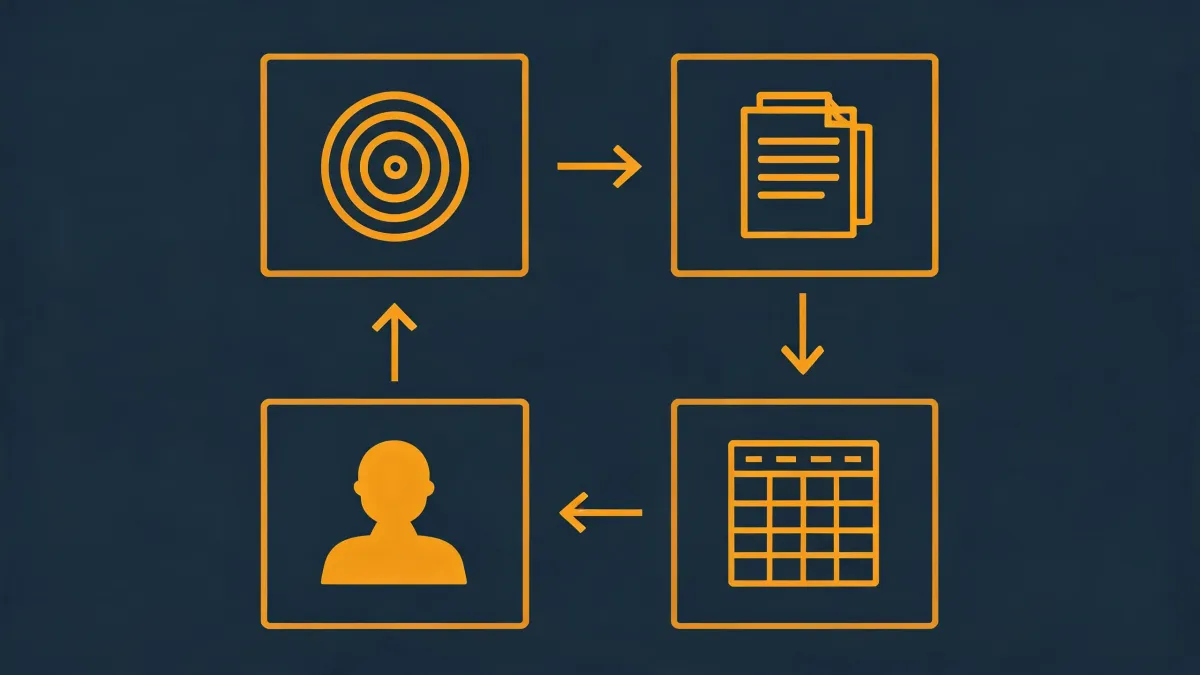
Okki Go is built around agent-native prospecting. I know “agent-native” sounds like a buzzword. Basically, it meant the platform had a specific workflow: source, enrich, verify, and route the output to a human. It runs enrichment through multiple sources in a waterfall model, which means it tries one source, falls back to another when needed, and only then marks a record unresolved. In other words, the data has a visible decision trail.
I had a false assumption going in: I thought the more “neutral” platform was the safer choice. Clay felt like a blank canvas. Okki Go felt like it came with opinions about how prospecting should work. I almost chose the blank canvas simply because it felt less controlling.
The problem? We didn’t have enough data engineering time to build on a blank canvas. I kept saying we could handle the setup. We couldn’t. Not without delaying every other RevOps project that quarter.
The mistake I almost made in the evaluation
I knew I should run both platforms against our ugliest data. But the demos were polished, and our renewal date was creeping closer. I told myself: “We’ve done the research. What are the odds a side-by-side test changes anything?” The odds. That’s the thing about odds—they only have to catch you once.
One SDR stopped the conversation with a question that sounded almost naïve: “Which one will stop sending us recycled contacts from the old database?” Nobody had asked that in any vendor demo. We were all comparing dashboards, record counts, and credits. The team’s real pain was repetition and decay.
So we ran a last-minute test on 250 accounts from our worst outbound segment. If you’ve ever done RevOps, you know the segment: the one that made our old prospect database useless.
The test results didn’t look the way I expected
Both tools found contacts. Clay is not bad at this. But the outputs pointed to different bottlenecks.
Clay produced a list in a familiar way: you configure sources, run enrichment, and export the results. Missing emails weren’t the dealbreaker. The dealbreaker was the manual assembly still waiting for us after the export. Every new source, every fallback rule, and every de-duplication step would become our responsibility.
Okki Go handled the same test differently. It matched the records, tried the first data source, and when a source didn’t have a good result, it fell to the next source before marking anything unresolved. I say “unresolved” because in our test it didn’t try to dress up a missing email as a valid one. It also didn’t leave us with a pile of maybes that could hurt our sending reputation.
Let me correct myself: Clay can do waterfall enrichment if you set it up. You can connect multiple providers and build custom logic. That’s part of why people love it. Okki Go just had that flow built into the core, so the platform did the fallback work before a human ever saw the record.
The difference on paper was smaller than the operational difference. One tool asked our RevOps team to assemble the machine. The other came with the machine already assembled and kept a human at the quality-control point.
That was the moment I realized I had the comparison backwards. The useful version of “Okki Go vs Clay” was not “which has better data?” It was “which one stops data from becoming our problem?”
Looking back, I should have run this test in week one. I didn’t because our easiest segment made both platforms look similar, and I wanted a quick decision. A bad choice would not have failed in the first week. It would have failed later, in the CRM, after everyone forgot what the decision was about. That’s the dangerous kind of mistake.
What we learned about Okki Go for RevOps
We chose Okki Go, but not because it was the only good option. Okki Go for RevOps made sense because it didn’t pretend to replace the judgment of our SDRs. It reduced the time they spent on bad records and gave them a better starting point. Clay is a strong choice for teams that need a flexible data fabric. It just wasn’t the right operational fit for us.
Even after we chose Okki Go, I kept second-guessing. I hit approve and immediately thought: “Did I just trade one data vendor for another?” The following two weeks were stressful. I didn’t relax until our SDRs started seeing the human review step catch records that a fully automated platform would have passed through.
That’s the part I think most comparisons miss. No tool we evaluated was going to replace the human decisions: who to contact, what to say, when to follow up. A good platform just removes the busywork before those decisions happen.
What should revenue operations teams evaluate in a B2B contact data platform?
If you’re sitting in a RevOps seat, don’t start with feature pages. Start with the data your SDRs complain about, then use that same sample to test every platform. And keep the checklist short:
- Test with the accounts that scare you. If a platform only looks good on clean accounts, that’s not a data platform. That’s a demo.
- Ask how verification works, not whether emails are “verified.” “Verified” can mean different things. Look for the step that decides what happens when a source has no match.
- Check if enrichment is a waterfall. One source and hope is the old model. Fallback sources plus clear statuses is the better model.
- Map the human touchpoint. A prospect database that moves data into your CRM is useful. A platform that hands your SDRs a starting point they can trust is worth more. Okki Go’s human-in-the-loop layer is the part I initially undervalued.
- Don’t ask only what it can do. Ask what it will do to your week. That’s where similar-looking tools separate.
The phrase “generate leads” has become a black box. But lead generation isn’t a button. It’s a chain: raw contact, verified email, enriched context, and a human-ready profile. If your platform covers the whole chain, the database is an asset. If it stops after the export, the database is just a chore with a logo.
The lesson isn’t that Okki Go is the only answer. It’s that B2B contact data decisions fail when we evaluate databases as products instead of processes. Okki Go vs Clay is a fair question. But if someone asks me today, I usually answer with a question: “Where does your team get stuck?” Choose based on the answer.