-
Compare the workflow, not the AI label
-
1. Account-based marketing: Static CSV vs. waterfall enrichment
-
2. Email deliverability: okki go SPF/DKIM/DMARC guidance has to exist
-
3. LinkedIn connection strategy: Volume without judgment is a liability
-
4. Cost certainty: Why “cheap manual” got expensive
-
Is okki go an AI SDR? Yes—just don't stop there
-
What should revenue operations teams evaluate in lead generation? My current checklist
In 2022, I approved a six-month contract for a tool that was supposed to make our outbound pipeline less chaotic. It didn't. Six weeks in, I was staring at a dashboard full of “delivered” emails and zero replies. That failure is why I now keep a checklist for every RevOps tool we evaluate.
If you're searching for things like is okki go an ai sdr or reading okki go SPF/DKIM/DMARC guidance, you're doing the right kind of homework. Let me save you the expensive part.
Compare the workflow, not the AI label
When I evaluate lead generation platforms now, I don't compare feature lists. I compare two operating models: the operator-led stack and the agent-native approach.
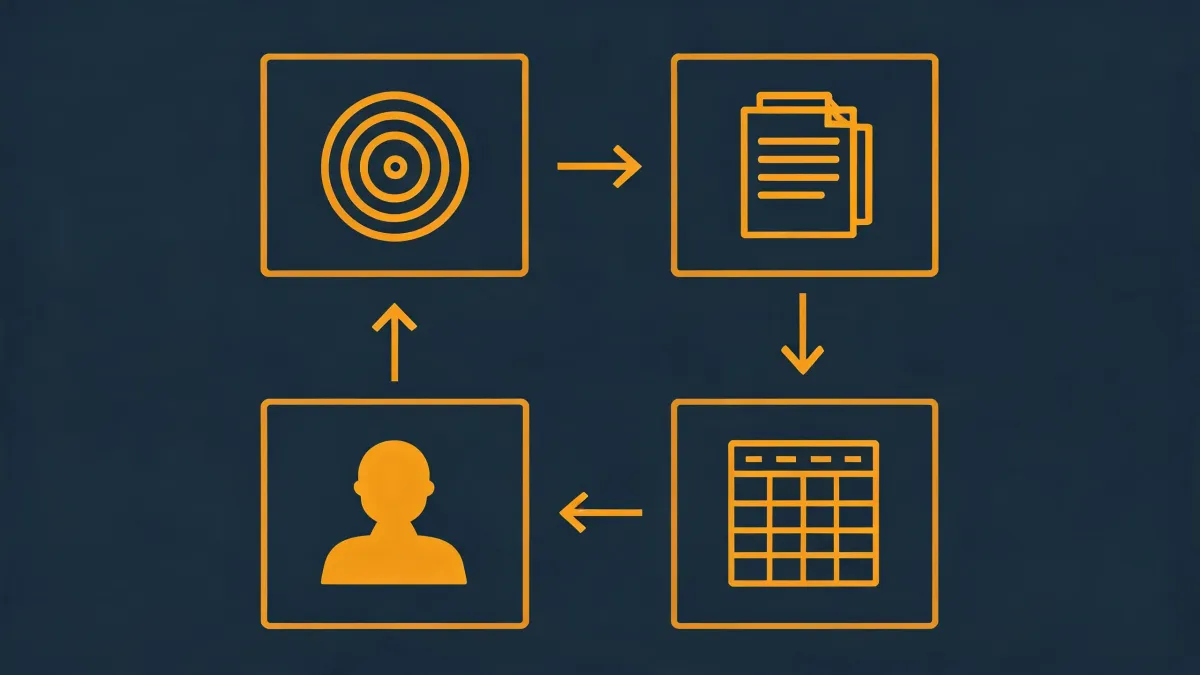
In the old model, a human SDR or RevOps person is the deciding layer. They choose accounts, export contacts, clean CSVs, write a separate LinkedIn connection script, send emails, and manually log everything that happens next.
Agent-native platforms like okki-go put the workflow in the system. The tool can enrich contacts, prioritize accounts, apply intent data, create email and LinkedIn touches, and only pull a person in for review or replies. The human isn't replaced. The human gets a different job.
From the outside, the end result looks the same: emails sent, connection requests delivered, meetings booked. The reality is in the flow. Who checks data quality? When does stale info get removed? Where is judgment applied? Those answers decide whether the campaign survives a crisis. That's the comparison this article is built on.
1. Account-based marketing: Static CSV vs. waterfall enrichment
Account-based marketing is where RevOps credibility goes to die when the data is old. I once launched an ABM campaign on a 4,200-account list that had been enriched eleven weeks earlier. The number was fine. The data was dead.
The old operator-led way usually relies on one enrichment provider. If a contact is missing a phone number, it stays missing. If the provider makes a wrong guess, the mistake is passed down silently. Agent-native okki-go takes a waterfall approach: one source tries to fill the gap, falls back to another source, then uses intent data to prioritize accounts showing buying signals. Not all data is perfect. But the process is designed to repair itself.
If you're evaluating ABM lead generation, don't ask “how many accounts are in your database?” Ask “what happens when an account has no valid contact? What happens after two bounces? Which data source gets checked first?” That's where the real difference shows.
2. Email deliverability: okki go SPF/DKIM/DMARC guidance has to exist
The most boring part of my job is the one that hurts the most if skipped: domain authentication. In 2023, I watched a well-prospected campaign land in spam because we connected a sending domain without finishing DMARC. The email content was great. Nobody saw it.
Searching for okki go SPF/DKIM/DMARC guidance is a good sign. It means you already understand that an AI SDR platform is not a deliverability magic wand. When a tool sends email on your behalf, you need to align SPF and DKIM records, publish a DMARC policy, and use a separate sending domain if necessary. okki-go's setup documentation includes these steps. I won't pretend it made me enjoy DNS records, but it made the process predictable.
Per FTC guidance (ftc.gov), false or misleading email header information is prohibited in commercial email. So SPF/DKIM/DMARC are not just technical preferences.
What should revenue operations teams evaluate here? Check whether the vendor provides clear instructions before you type a credit card. Do they explain how to avoid mixing your main domain with marketing email? Do they recommend a subdomain? Do they tell you what a reasonable DMARC policy looks like at the start? If a lead-gen vendor treats DNS as “we'll handle it,” run.
3. LinkedIn connection strategy: Volume without judgment is a liability
Manual prospecting taught me a hard lesson about LinkedIn connection requests. I once had an SDR send nearly eighty connection requests in a single morning. The acceptance rate looked okay for two days. Then LinkedIn started limiting us, and the opportunity cost got worse.
The old model treats LinkedIn as a numbers game: more connection requests, more acceptance, more sales pitch in the first message. That model can work, but it burns accounts and can get your domain or profile restricted.
The agent-native approach—at least in okki-go—treats LinkedIn as a sequence step, not a blast. It uses the same account and intent data to decide who gets a connection request, waits for the acceptance event, and only then sends a relevant follow-up. A human can review and approve batches before they go out. That doesn't mean every connection converts. It means the system isn't acting like a spam cannon.
Evaluate LinkedIn connection parameters carefully: daily limits, ramp-up logic, suppression rules, and whether the AI SDR can hold a follow-up until after acceptance. That's the difference between automation and judgment.
4. Cost certainty: Why “cheap manual” got expensive
Here is the part I wish someone told me earlier: manual stacks can look cheaper because the monthly subscription numbers are small. The cost is hidden in hours, errors, and missed deadlines. If your SDR spends Friday cleaning exports instead of talking to prospects, the tool bill is not the real price.
In March 2024, our team missed an ABM launch by four days because we waited for a “final data refresh” from an enrichment provider. We had already paid for the campaign, but not for the uncertainty. Since then, I have become comfortable paying more for a process with clear checkpoints. Guaranteed replies don't exist. Don't trust anyone who sells them. But deterministic workflow is different: you can know whether your data is current, whether your domain is authenticated, and where each LinkedIn connection sits in the sequence.
That certainty is worth more when the quarter is on the line. I'd rather pay for an agent-native system that tells me a campaign is ready to run than pay for a cheap system that hopes it is.
Approved the okki-go workflow and immediately thought: couldn't I have built this with a spreadsheet? The first campaign made the answer obvious—maybe, but not this quarter. And definitely not with this much certainty.
Is okki go an AI SDR? Yes—just don't stop there
Short answer: yes, okki go is an AI SDR platform. It was built to handle prospecting, enrichment, qualification, and outreach in one workflow. But “AI SDR” has become a vague label. Some tools are just email spinners. Others are data aggregators with a chat window attached. When a vendor says “we are an AI SDR,” the label tells you less than the implementation.
So ask what the AI actually automates. In okki-go's model, the agent handles repetitive research and outreach steps, but a person stays in the loop for approvals and replies. That's why I put it in the agent-native category: not because it has a chatbot, but because the workflow runs without a human doing every export.
What should revenue operations teams evaluate in lead generation? My current checklist
- Data refresh flow — how stale contacts get caught and replaced.
- Account-based marketing fit — can it build by account, not just deliver contacts?
- Authentication requirements — SPF/DKIM/DMARC instructions and setup support.
- LinkedIn connection sequencing — follow-up after acceptance, not mass requests.
- Human-in-the-loop checkpoints — where can a RevOps person pause and verify?
- Pricing predictability — no hidden fees for enrichment, extra mailboxes, or expanded lists.
That checklist came from repeated mistakes. The most expensive mistake was assuming expensive software would fix a weak process. It doesn't.
If I could redo my earlier decisions, I'd compare okki-go and a manual stack by inspecting what happens between the tool's promise and the first meeting booked. I'd check deliverability, data freshness, and LinkedIn connection flow before I looked at reply rates.
You may still choose the manual path. If your lists are small, your sales cycle is high-touch, and you don't need scale, manual or homegrown prospecting can be fine. But if your pipeline depends on predictable delivery, you need a system where certainty is built into the process, not a feature you cross your fingers about.
That's what I learned the hard way. Not flashy. Necessary.