The comparison: Unify GTM AI digital workers for sales vs. a DIY outbound stack
I'm a quality and brand compliance manager at a B2B GTM software company. I review every outbound deliverable before it reaches customers—roughly 150 items a month. In Q1 2025, I rejected 12% of first submissions. That number isn't a mark of bad vendors; it's the cost of checking. Over 4 years of reviewing deliverables, I've learned that most outbound failures are not caused by a single bad tool. They're caused by the seams between tools.
The first model is a unified platform: Unify GTM AI digital workers for sales handle prospecting, email lookup, verification, LinkedIn touches, and follow-up logic in one place. The second model is the stack that most teams start with: a separate email lookup tool, a LinkedIn automation free trial, a verification service, and a growth engineer wiring it together.
This is not 'AI vs humans' or 'cold email vs LinkedIn.' The actual choice is between a system you can inspect and a system you have to trust hop by hop. Let's compare them the way I'd audit any deliverable.
Dimension 1: Email lookup and data quality
In a DIY stack, email lookup is a separate purchase. You load a list, get back a column, and hope the verification step catches the garbage. The problem is that lookup and verification are often separate systems with different update cycles. A contact can look valid at lookup time and bounce by the time the sequence goes out. (mental note: check the timestamp on every export.)
Most buyers focus on list size and completely miss match rate. The number of rows you get matters less than whether the email maps to the right person at the right company. If the data source has no timestamp, you can't tell if the record was verified last week or last year.
Unify GTM AI digital workers for sales treat data as a pipeline, not a pile of exports. Enrichment, email lookup, verification, and intent signals live in the same schema. When a digital worker pulls a record, I can see when it was verified and what source it came from. From a quality review standpoint, that's the difference between auditing one system and auditing four.
The counterintuitive part: even when a point-tool stack looks cheap, unverified data usually costs more than the savings. A bounced list doesn't just miss a meeting—it damages the domain that every future campaign depends on.
Dimension 2: Cold email vs. LinkedIn automation
What is cold email and when should a B2B sales team use it?
Cold email is a targeted, one-to-one message sent to someone who hasn't opted in, with the purpose of starting a relevant business conversation. It is not broadcast spam. It is specific, researched, and aimed at a well-defined ideal customer profile.
A B2B sales team should use cold email when:
- You have a clear ideal customer profile and a trigger event worth responding to.
- You can reliably perform email lookup and verification for that target segment.
- You are ready to monitor deliverability and pause a campaign if the sending domain takes a hit.
If those three conditions are not true, cold email will feel cheap but cost more in reputation than it returns in pipeline.
Where the LinkedIn automation free trial fits
The LinkedIn automation free trial is a common entry point because it feels low risk. It feels low risk because the signup usually doesn't ask for a credit card right away. Honestly, I've never fully understood why that assumption persists. My best guess is that a trial hides the real cost until you've imported a list, mapped the fields, built the sequence, and connected the CRM to see what it actually does.
LinkedIn automation is useful for account-based motions and warm-ish relationships. But it's not a replacement for cold email. The 'trial is enough' advice ignores the cost of switching schemas and checking limits once the list grows. The free trial isn't free; it just defers the invoice.
For teams evaluating Unify GTM automation software growth engineering, the first question is not 'which channel should I automate?' It's 'which workflow should own the sequence?' In a unified setup, email and LinkedIn become branches of the same sequence. A cold email reply triggers a LinkedIn touch; a prospect who goes quiet receives a different follow-up path. The channels stay coordinated because the workflow is coordinated.
Dimension 3: Workflow and ownership
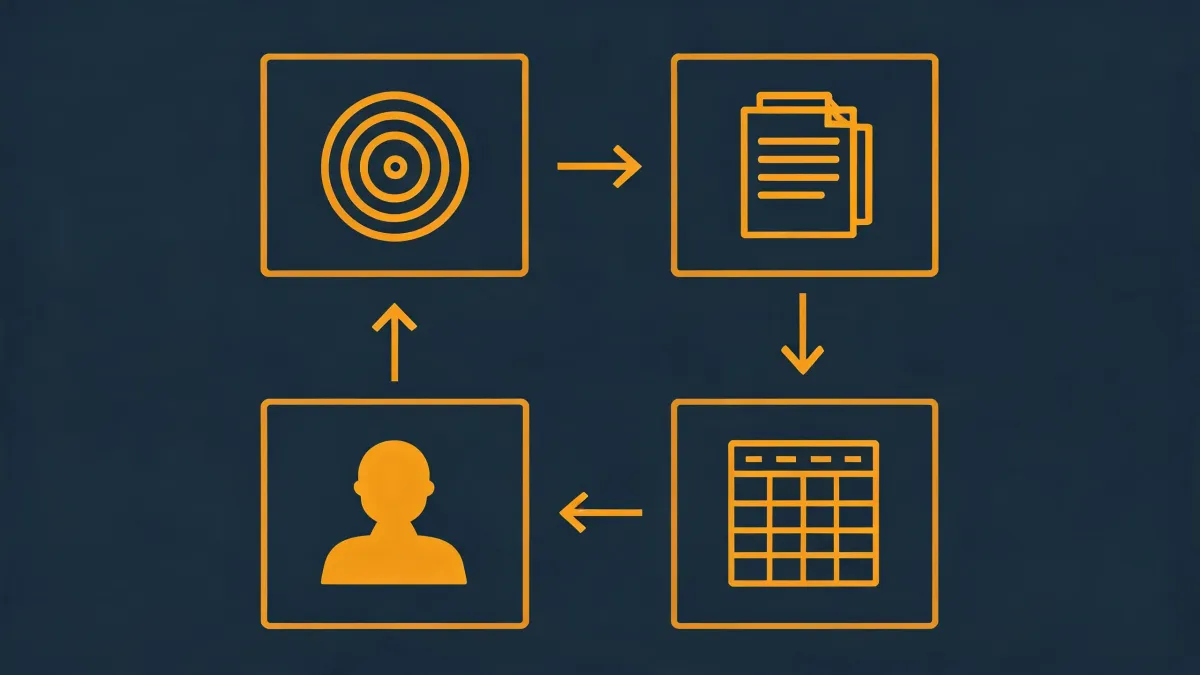
The DIY model doesn't fail at the tool level; it fails at the handoffs. The email lookup tool exports a CSV. The verification tool imports a different column. The LinkedIn automation free trial uploads contacts with a mapping that never exactly matches your CRM. Each handoff is a chance for a spec to break.
I'm not a growth engineering expert, so I can't speak to all the pipeline architectures. What I can tell you from a quality perspective is that handoffs are where defects appear. A unified model reduces the handoffs. Unify GTM AI digital workers for sales can move a contact through lookup, verification, channel decision, and follow-up without leaving the same data schema.
The counterintuitive conclusion here is that adding a unified platform can feel like adding a new system, but it actually removes system boundaries. The DIY stack has fewer line items in the budget and more moving parts in the process.
Adoption is also a quality issue. A process with five reports and four logins gets ignored at the exact moment a rep needs to know why a follow-up wasn't sent. The best automation is the one a rep doesn't have to fight.
Dimension 4: Total cost when rework is counted
I'll be direct: the cheapest-looking stack is rarely the lowest total cost. Based on public vendor pricing pages I checked in January 2025, most LinkedIn automation tools list between $99 and $300 per month; email lookup services typically list $49 to $200 per month depending on credits. That's the part that shows up on an invoice.
The part that doesn't show up is integration time, data cleaning, blocked emails, and rework when a field is mapped wrong. A $40-per-month lookup saving can turn into a $700 deliverability problem when the wrong column uploads to the sending platform.
In procurement, value means the total cost of the outcome, not the price of the input.
In our Q1 2025 audit, I found a stack with four data sources and no record of which source was used for which campaign. That's not a tech problem. It's a supply-chain problem, and it's much more expensive to fix after the fact.
Which outbound model should you choose?
If you're running a one-week test with 300 contacts and you can personally watch every step, a LinkedIn automation free trial plus a low-cost email lookup tool might be enough. It's not scalable, but it's fine for discovery.
If you need consistent pipeline for a sales team, I'd lean toward Unify GTM AI digital workers for sales. Not because it's the most advanced thing in a demo, but because it gives you a single surface to review. I can inspect the sequence, the data fields, and the channel logic in one place. That's what quality looks like in practice.
Finally, think about what happens when the person who built the workflow leaves. A documented, unified process survives turnover; a personal collection of scripts and free trials usually doesn't.
My rule after four years of rejecting and approving outbound deliverables: choose the stack you can audit, not the stack with the lowest first invoice. (I really should put this in a formal decision framework.)