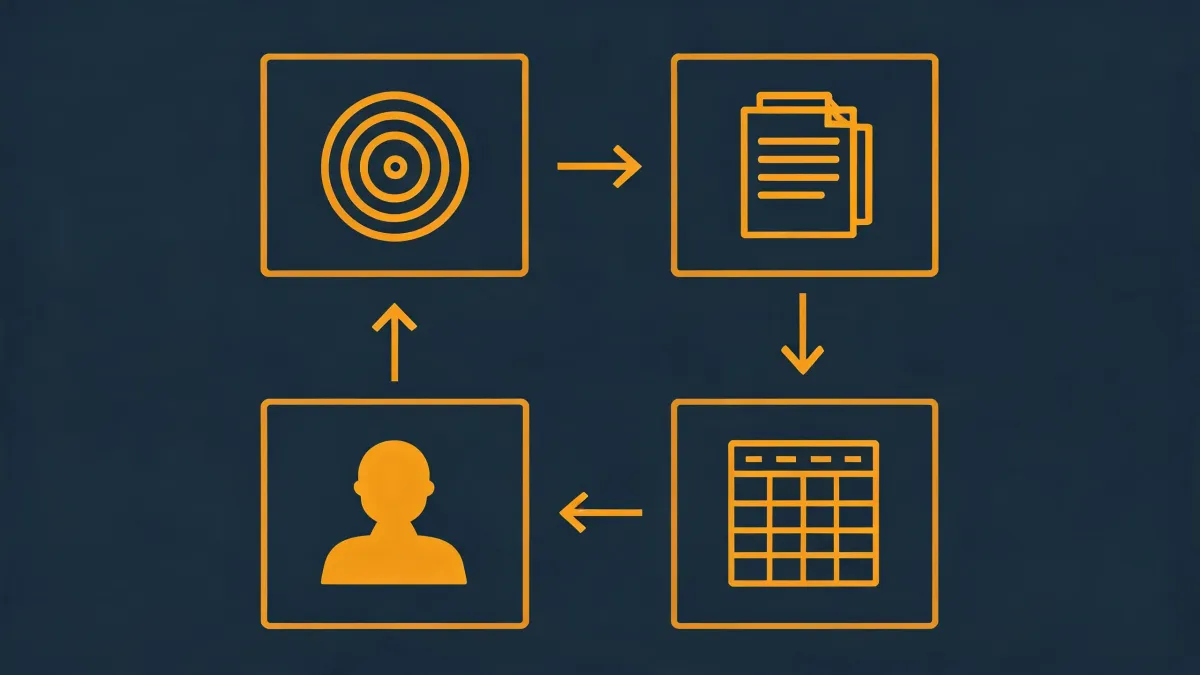
Here's the short version: waterfall enrichment is worth implementing only after your ideal customer profile is validated, you have at least 200 target accounts per campaign, and you know which buyer persona you're enriching for. Adopt it earlier—as I did in 2022—and you're mostly paying to enrich your own confusion. We burned roughly $12,000 in enrichment credits over six months and generated meetings at half the rate of our previous, "lower coverage" process.
That's not a knock on the technology. Waterfall enrichment is genuinely powerful. But it solves a data coverage problem, and most B2B teams haven't actually diagnosed their problem correctly.
I'm a revenue operations manager who's been running B2B outbound data stacks for six years. I've personally made and documented 7 significant data infrastructure mistakes—totaling roughly $40K in wasted budget. This one was the most expensive. The good news: our team now has a checklist that has caught 47 potential data errors in the past 18 months, and I want to share what I learned.
How I Learned This the Hard Way
In March 2022, I pitched my VP of Sales on a "coverage upgrade." Our single enrichment source was matching on about 46% of target accounts. I argued that a waterfall setup—querying multiple vendors sequentially and paying only for successful matches—would push us to 75%+. The math sounded right. The premise wasn't.
Our ICP at the time was... loose. "Tech companies in the US with 50-500 employees." That's not an ICP; that's a TAM. We went ahead anyway, synced 800 accounts through three enrichment vendors plus an orchestration tool, and spent roughly $12K on credits in six months. We enriched 6,500+ contacts and sent 40,000 outbound emails. The result: 14 qualified meetings. That's a 0.035% meeting rate—less than half our pre-enrichment baseline.
What's worse, we couldn't tell which "enriched" record actually drove those meetings. The parallel tracking we'd built was a mess—different metrics in different tools. We knew the data was "more complete." No, wait—we knew the coverage rate was higher. That's not the same thing. That's when I started writing our checklist.
What Is Waterfall Enrichment, Actually?
Waterfall enrichment is a sequential data-matching process. You take a list of accounts or contacts and run it through Vendor A first. For records Vendor A can match, you use their data and stop. For the gaps, you move to Vendor B. Then Vendor C. Each vendor only sees the records the previous one missed, and you pay per successful match rather than per record.
Here's a concrete example. Say your target list has 1,000 accounts and you need decision-maker emails. Vendor A covers 480 of them. Vendor B covers 320 of those remaining 520. Vendor C covers another 130. Your waterfall just went from 48% coverage to 93%—and you only paid for 930 successful matches instead of 3,000. That part worked for us. Our coverage did jump. What didn't change was the quality of our targeting.
Why does this coverage gap exist? Because no single data provider covers the whole market. They all have strong coverage on the "easy middle"—large, well-established companies with obvious employee data—and their coverage diverges sharply on mid-market accounts, international companies, and newer firms.
But here's the catch that vendors won't tell you: enrichment coverage is meaningless if the underlying account list is fuzzy. We were enriching records that looked fine on the surface (right title keywords, decent fit scores) but had zero intent signals, no budget stretch, no recent hiring activity, nothing. The data was "complete." It was also useless.
Why This Is Different in 2025
What was best practice in 2020—buy a list, validate emails, blast generic copy—is a losing strategy in 2025. According to Gartner (gartner.com), data quality issues cost organizations an average of $12.9 million per year, and the problem has gotten worse as the volume of contact data explodes.
Three things have shifted:
- Buyers expect personalization. Generic one-size-fits-all outbound gets deleted or marked as spam. Relevant personalization requires accurate data—not just valid emails, but current intent, recent changes, and actual persona match.
- Multichannel is table stakes. Email alone isn't enough. LinkedIn, phone, and digital ads working in sequence—often powered by AI agents—require consistent, unified data across channels. Disjointed enrichment creates disjointed outreach.
- AI amplifies both good and bad data. An AI sales assistant working with bad data doesn't just send bad emails; it sends hundreds of bad emails at scale, faster than any human could. The cost of "garbage in" has multiplied.
So yes, the tooling has evolved. AI digital agents for GTM, intent data platforms, unified automation software—all of that is real progress. But the prerequisite hasn't changed: garbage data in means garbage automation out.
Most sales leaders focus on coverage rates and completely miss data relevance. The question everyone asks is "what's your match rate?" The question they should ask is "what does your data tell me about which contacts to prioritize?"
When Waterfall Enrichment Actually Makes Sense
Our current pre-enrichment checklist has 5 conditions. If you can't say "yes" to all of them, fix that before you spend money on a waterfall:
- Your ideal customer profile (ICP) is validated against real won deals. Not your gut, not a whiteboard. Pull your last 25-50 closed-won opportunities and identify what they actually share: industry, employee count, tech stack, trigger events.
- You have at least 200 target accounts per campaign. Waterfall enrichment has integration and management costs. If you're running a 50-account ABM play, the math doesn't work—manual research plus a single source is faster and cheaper.
- You know which persona you're enriching for. Are you going after the VP of Revenue, the Head of Sales Development, or the CRO? Enriching every contact on the account is wasteful. We now create persona-specific enrichment rules.
- Your outbound motion is ready to actually use the data. If your emails, LinkedIn sequences, and call scripts are generic, better data won't help. The content needs to be personalized based on the enriched attributes.
- You measure what happens after enrichment, not just coverage. Coverage rate is an activity metric. Meeting rate, reply rate, and opportunity rate are outcome metrics. Don't fall for the vanity numbers.
At my current company, we standardized on unify-gtm to make this work. Their automation software for outbound marketing handles email verification before enrichment (so we're not paying to clean garbage), runs the waterfall across multiple data sources, and overlays intent data on top. We call it "checking a record before we spend a dollar on it."
That's the thing I wish someone had told me in 2022: the order of operations matters. Verify, enrich, then layer intent signals. If you reverse that—or skip the verification—you're paying for junk, and the junk compounds across every channel you're touching.
When Waterfall Enrichment Is the Wrong Call
I don't want to oversell this. This approach worked for us, but we're a mid-size B2B company with a stable, predictable market. If you're a seasonal business with demand spikes, the calculus might be different. And in my experience, if you're in any of these situations, a waterfall is premature:
- Early-stage teams sending under 1,000 emails/month. Use one good source, pair it with email verification, and spend your time on messaging instead.
- Enterprise ABM with 50 or fewer named accounts. The coverage gains of a waterfall don't matter when you can research each account by hand.
- Unvalidated ICP. If you don't know who your best customer is, run a campaign with a single data source first. Use the replies and meetings as your ICP validation signal.
- Real-time web form completion. Waterfall is for batch processing. For real-time verification or progressive profiling, you need a different architecture.
Also, a word of caution: enrichment coverage rates have shifted post-2022 as privacy regulations tightened and data quality across vendors became more variable. We've seen 30%+ variance between vendors on accuracy for the same records. Verify current performance before you sign a contract. Don't hold me to the numbers I've given here—they were true for our stack at the time, but this market moves fast. Roughly speaking, plan to re-test vendor quality quarterly.
The fundamentals of B2B targeting haven't changed since I started in this space: know who you're selling to, get the right contacts, say something relevant. What's changed is the execution. Waterfall enrichment, AI sales assistants, intent data, unified GTM platforms—these are all powerful multipliers. But they multiply whatever you feed them. If your ICP is fuzzy and your data hygiene is weak, they multiply your problems.
Spend your first $10K on nailing the ICP. Spend the second $10K on data infrastructure. You'll thank me later.