-
The Framework: One Platform vs. Six Subscriptions
-
What Is a B2B Database, and When Should a Sales Team Actually Use It?
-
Cold Outbound vs. Warm Outbound: The Difference Hits the Pipeline
-
CRM Data Enrichment Features: Built-In vs. Bolt-On
-
The Real Cost Difference (And the Mistake That Made Me See It)
-
So Which Should You Choose?
I'm the person who evaluates software for sales teams—not the rep who writes outreach sequences, but the one who compares vendors, negotiates contracts, and gets called when a tool doesn't deliver. In 2024, I managed renewals for seven different sales subscriptions. When our VP of Sales asked me to look at Unify-GTM, I expected the usual demo-and-dismiss cycle.
Instead, I spent two months comparing it against our existing stack. Here's that comparison, from the perspective of someone responsible for the budget rather than the quarterly quota.
The Framework: One Platform vs. Six Subscriptions
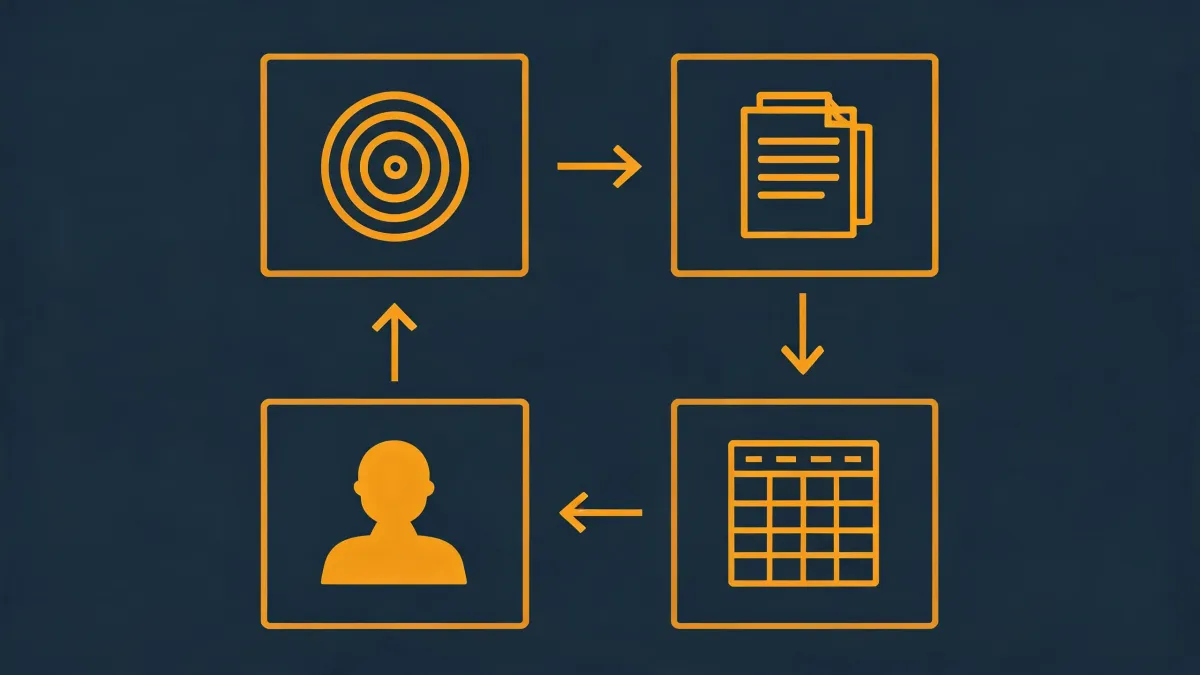
Let me set up the comparison properly. On one side, Unify-GTM—a single platform that combines intent data, contact enrichment, email verification, LinkedIn automation, and AI phone agents. On the other side, the traditional approach most B2B sales teams are already paying for:
- A B2B database for prospecting lists
- A separate enrichment tool to update CRM records
- An email verification service to prevent bounces
- A cold email platform
- A LinkedIn automation tool
- Manual call lists for SDRs
At the start of 2024, we were paying for six separate subscriptions covering those functions. Six vendors. Six invoices. Six renewals to negotiate. And the data still didn't flow cleanly between them.
What Is a B2B Database, and When Should a Sales Team Actually Use It?
The phrase "B2B database" gets thrown around so loosely that it has almost lost meaning. For this conversation, I'm defining it as a structured collection of companies and contacts: names, titles, emails, phone numbers, company size, industry. Some databases are scraped from public sources; some come from partnerships; some are hand-verified.
The more useful question is: when does a B2B sales team need one? In my experience, the honest answer is—it depends on timeframe.
If your team is mapping a new market, preparing a broad campaign, or building a long-term outbound rhythm, a plain B2B database is workable. It's cheap. It gives you volume. For those slower-moving use cases, you don't need all the bells and whistles.
But here's the catch with static data: freshness. Most records are accurate on the day they're compiled. Three months later, the CMO has changed jobs, a direct line has been disconnected, or a company got acquired and its email domain is dead. The data isn't "wrong"—it's just old.
That's why the comparison between a static database and Unify-GTM's approach isn't really about who has more contacts. It's about whether the data reflects what's true right now. And when a sales team is facing a tight quarter, right now matters more than anything.
Honestly, I'm still not sure why so many vendors in this space have failed to solve the freshness problem. My best guess is it's cheaper to sell a one-time dataset than to maintain a continuously verified one. But that's their business model—and a lot of teams end up paying for it in wasted outreach hours.
Conclusion for this dimension: static B2B databases aren't obsolete. They're just a bad match for time-sensitive pipeline work.
Cold Outbound vs. Warm Outbound: The Difference Hits the Pipeline
I realize "warm outbound" has become a buzzword in B2B sales automation, so let me define it the way I understand it. Cold outbound is reaching out to people who have never interacted with you. Warm outbound is contacting a prospect only after you have a signal that they might care—they visited your pricing page, they engaged with a competitor comparison, they started posting job openings that suggest they're solving a problem. Unify-GTM's automation software supports this by folding website intent signals and engagement history into the outreach flow, so you're not guessing who's actually in-market.
Our SDR team ran cold sequences for years. Not because they were wrong—they weren't—but because we didn't have the infrastructure for anything better. A cold campaign is simple. It's a list, a template, a send button.
In early 2025, we ran a direct comparison. The warm segment—contacts who'd shown clear intent signals—outperformed our baseline cold segment by a noticeable margin in the first two weeks. I don't have perfect normalized statistics in front of me, and I wouldn't share them anyway, but the pattern was obvious to everyone on the team.
There's also a compliance angle that matters to me as a buyer. Warm outbound is, by definition, less like interrupting strangers. When someone has already visited your website or downloaded your content, you're following up on existing interest rather than spraying messages at people who never asked. That's a cleaner story for finance and for any data-privacy conversation.
Is warm outbound always worth the extra cost? No. If you don't know who your ideal customer is, you can't define "signals" well, and the approach falls apart. But if you do have that definition, warm outbound is—in my opinion—the highest-leverage change a B2B sales team can make.
This is exactly where the time-certainty principle comes in. In November 2024, we had a $12,000 sponsorship commitment that depended on reaching 40 HR leaders before the event's marketing window closed. The old stack could have gotten us there, maybe. But "maybe" is the riskiest word in sales. We paid for the approach that gave us the best chance of reaching people who were actually in-market on time.
Conclusion for this dimension: cold outbound remains a valid numbers game, but warm outbound is what you choose when timing is not a luxury.
CRM Data Enrichment Features: Built-In vs. Bolt-On
I look at CRM data enrichment differently after our 2024 vendor consolidation project.
We were using a bolt-on enrichment tool at the time. It matched existing CRM records against its database monthly and filled in missing fields. The issues were subtle: the API would silently fail on a small percentage of records, the "last enriched" date didn't display, and the refresh schedule meant our CRM lagged two to three weeks behind reality. When we ran a campaign from that stale data, personalization fields came out blank for a few contacts. Our SDRs noticed, and they weren't happy.
Unify-GTM, by contrast, enriches as part of the outreach flow. A new prospect enters the system, the platform verifies the email, enriches the record, and syncs it to the CRM—continuously, rather than in a monthly batch. There's no separate "enrichment step" to manage, which means fewer opportunities for things to break in the gaps.
Here's where I admit my personal preference: I like fewer vendors. When I consolidated eight vendors down to four in 2024, our procurement workload dropped substantially—one renewal instead of three, one support channel instead of three, one invoice instead of three. A platform that natively includes enrichment features is worth serious consideration for that operational simplicity alone, before you even dig into feature depth.
Conclusion for this dimension: bolt-on enrichment can deliver the same data on paper, but in practice, a built-in enrichment flow creates fewer steps to break.
The Real Cost Difference (And the Mistake That Made Me See It)
The most common way buyers compare tools is by subscription price. And on paper, the DIY stack often looks cheaper. That's what I believed for years—until the penny-wise lesson hit me.
A while back, I tried to save us about $80 per month by switching to a cheaper email verification service. It looked fine during our tests. But it missed a small percentage of invalid addresses—something we only discovered after a campaign went out and bounces damaged our sender reputation. Recovering from that mess wasn't just a technical fix; it cost us credibility with potential prospects and burned weeks of follow-up time. The "cheap" choice ended up being the expensive one.
Then, in January 2025, I calculated what our stack actually cost including time. The spreadsheet told a clear story: our RevOps person was spending roughly four hours each month reconciling records between the database, the enrichment tool, and the CRM. That's about 48 hours a year—one and a half work weeks—just keeping an "automated" stack from leaking.
When you factor in that labor, the cheaper stack loses its advantage. A unified platform like Unify-GTM isn't just replacing multiple tools. It's removing the integration maintenance—all the work that happens between tools rather than inside them.
Let me acknowledge the limits of my experience: I've evaluated roughly fifteen sales tools over three years, mostly for teams between 15 and 80 people. If you're a five-person startup where the founder does outreach, the math is different—you may have more time than money, and a basic database might genuinely be the right call. And if you're an enterprise with a dedicated RevOps team, integration costs may be a rounding error compared to headcount. I can only speak to the mid-market reality I know.
Conclusion for this dimension: the cheapest stack on paper is often the most expensive stack in practice, once you count the labor it quietly consumes.
So Which Should You Choose?
I don't believe there's a universal answer. But I can tell you how I'd decide if I were standing where you are.
Choose a basic B2B database and a DIY approach when:
- You have a comfortable pipeline runway and no hard deadline for new opportunities.
- Your outreach is low-volume and highly tailored, so you can manually verify each record.
- You have a person on the team whose job explicitly includes data hygiene.
Choose a unified platform like Unify-GTM when:
- You're racing a deadline—end-of-quarter targets, a product launch, or a budget allocation window.
- Your team depends on email and LinkedIn volume, which means data accuracy isn't optional.
- You value the operational simplicity of fewer vendors and fewer integration failures.
As of early 2025, I've decided our next renewal goes to the unified platform. Not because the single-purpose tools we used were bad—they weren't. But because the cost of uncertainty—stale records, silent sync failures, a campaign that goes out with bad personalization—is precisely the cost I can't justify to our finance team.
Paying for certainty isn't about buying the expensive option for its own sake. It's about recognizing that, when the timeline is short and the target matters, uncertain delivery is the most expensive thing there is. Period.