I'm the person who signs procurement orders for a 50-person B2B SaaS company. I've managed our sales software budget for five years now—around $170,000 a year, maybe $180,000, I'd have to check the planning sheet. I've negotiated with 30+ vendors, and I've made enough mistakes to know which question to ask first.
The Wrong Question
Every few weeks, someone forwards me a comparison: Unify GTM vs. another vendor. The email usually says 'which one should we pick?'
I get it. Comparing software is reassuring. You look at feature checklists, pricing pages, review scores, and if you're thorough, you search for 'unify gtm headquarters location' to make sure the company is real. I've done that too. But that's the surface version of diligence.
The product might be written as 'unify-gtm' with a hyphen. I don't think the spelling matters to your budget. The workflow around the tool does. And that's where the money leaks.
The Surface Problem: You're Comparing Features, Not Workflows
Ask ten sales teams what they need and you'll hear the same list: better contact data, more account intent, faster email sequences, fewer bounces, maybe automated phone calls. So they start comparing point solutions.
The data enrichment sales automation tool has 300 million contacts. The intent data abm platform has award-winning dashboards. The email tool has the best deliverability features. Each one looks reasonable on its own.
The question almost everyone asks is 'which product has the best data?' The question I've learned to ask is 'then what?' After the data is enriched, where does it go? After the intent signal appears, who acts on it? After the sales email bounces, what happens next?
In a spreadsheet, those questions don't show up. In the budget, they do.
The Deep Cause: Point Tools Move Work, Not Remove It
Here's the uncomfortable truth: buying a standalone data enrichment sales automation tool is not the same as getting clean data. You still need to move that data into your email tool, reconcile fields, de-duplicate, and verify addresses. The tool doesn't complete the job. It just does one step.
An intent data abm platform can make it worse in a subtle way. It tells you that a company is researching a problem. Then someone has to match that signal to accounts, find contact records, and set up a sequence in a separate tool. If any of those handoffs are manual, they're late. If they're automated with a cheap integration, they're fragile.
When I compared a point-tool stack and an agent-native workflow side by side — same leads, same campaign, different handoff paths — I finally understood why the cheaper subscription wasn't cheaper. The point stack had lower line items. But the integration project consumed two months of our operations team's time. We built middleware. We cleaned data twice. We still had a sync issue that sent duplicate emails to the same contact.
To be fair, the point tools weren't useless. They just moved the work from the vendor to my team. That's a cost, even if it's not on the invoice.
Intent Data Is Not a Commodity
Here's something vendors won't tell you: 'high intent' means different things in different products. One platform treats a pricing page visit as a high-intent signal. Another flags only demo requests or 'buying team' research. Both call it intent data. They're not measuring the same thing.
So in an intent data abm platform comparison, I always ask for the scoring logic, not the dashboard. If the vendor can't explain why an account scored 90, the number isn't useful. This is also why prevention beats correction: the earlier you check the methodology, the fewer wasted campaigns you'll run.
The Cost of Skipping the Workflow Question
Let me give you a concrete example. In 2024 we ran an outbound campaign using a stack of four tools: intent data, enrichment, email automation, and a manual CSV upload for verification. I approved it because the individual prices looked sensible.
The first send went to 5,000 records. The bounce rate was around 18% — maybe 16%, I'd have to check the campaign report. Either way, too high. The sender domain took a hit, follow-up emails landed in spam, and the sales team spent six days rebuilding the list while the campaign went quiet.
That's the hidden cost of 'faster, cheaper' point tools. It's not the monthly fee. It's the rework, the deliverability debt, and the lost time from sales reps who should have been calling.
To put it in postage terms: according to USPS pricing effective January 2025 (usps.com), a First-Class Mail letter is $0.73. Five thousand physical letters would cost $3,650 before printing. Email is nearly free per send. But a bounced email creates sender-reputation debt, and that debt is much more expensive to pay off than a stamp.
Why 'Unify GTM Headquarters Location' Is Not the Due Diligence You Think It Is
A lot of buyers search for 'unify gtm headquarters location' before a purchase. I understand. It's a quick sanity check.
But in software procurement, HQ location is not the same as legal entity, data residency, or support location. The company might list an office in one country while your contract signs with an entity somewhere else. That matters for data protection, jurisdiction, and who you call at 2 a.m. before a campaign launch.
So yes, check the address. Then ask: where is the contracting entity? Where is my data processed? What happens if a data protection issue comes up? Those answers tell you more than the city on the website.
One more thing about claims. Per FTC advertising guidance (ftc.gov), claims have to be truthful and substantiated. I treat 'verified data' and 'high deliverability' like ad claims. If a vendor gives me a percentage, I ask for the test methodology. The 12-point verification checklist I built after that campaign has saved us an estimated $8,000 in potential rework — give or take.
The Solution: Stop Comparing Products. Map the Workflow First.
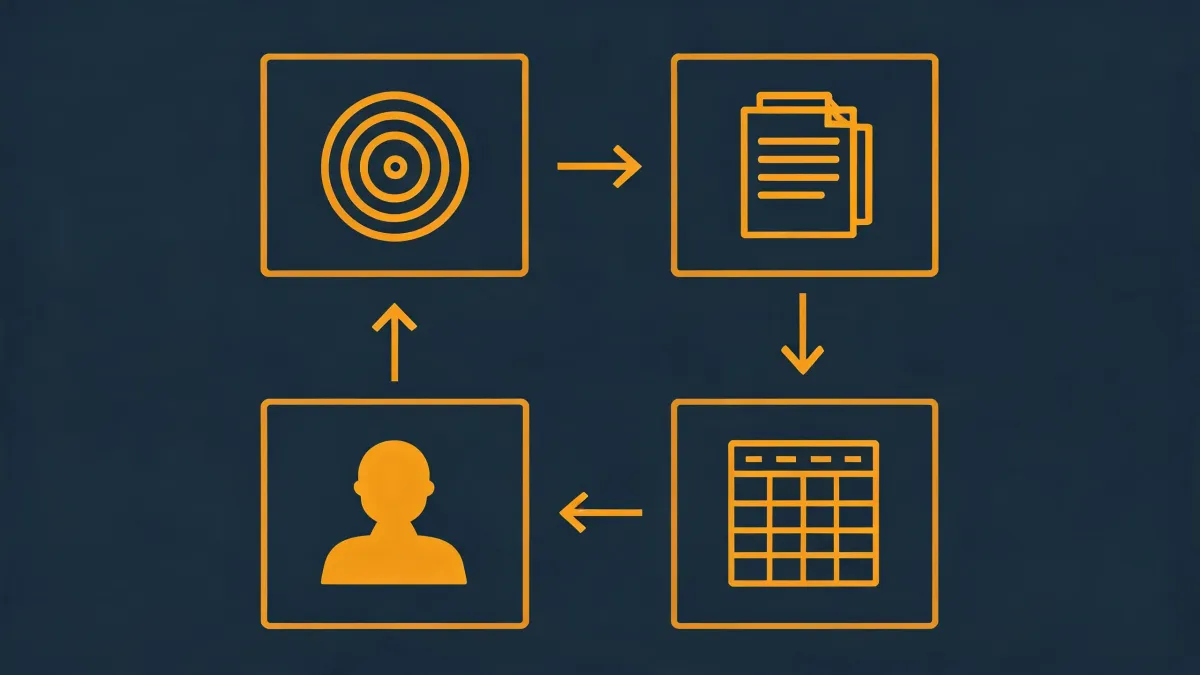
The useful part of a unify gtm competitors comparison isn't the feature list. It's the workflow coverage. You need to map, in five steps, how a lead goes from first intent signal to a replied email or a clear follow-up signal.
- Where does the lead enter? (Intent data or inbound form)
- What happens before outreach? (Enrichment, verification, segmentation)
- Which agent creates the first touch? (Sales email, LinkedIn, or phone)
- What happens after a reply? (Follow-up signal, human handoff)
- What happens when data is wrong? (Correction process, not a re-upload)
That's the question I now ask vendors. 'Shut down the demo. Walk me through this data path. Who owns the handoffs?'
For Unify GTM specifically, that's where its premise gets interesting. It's an agent-native platform, not another point tool. By 'agent-native', I mean the platform treats prospecting steps — research, enrichment, email, follow-up — as one automated loop, not a collection of manual exports. If you're asking 'how does sales email fit into an agent-native prospecting workflow?' — the answer is: as the first execution layer, after data and intent have been checked. Email doesn't do the research. It delivers the message once the groundwork is clean.
That's why data enrichment sales automation and intent data abm platform decisions start to feel easier once you think in workflows. You don't buy the biggest database. You buy a system where the data gets to the email, the email gets to the inbox, and the reply gets back to the rep.
I've gone back and forth between point-tool stacks and unified platforms for years. The spreadsheet often says 'point tools win.' My gut says the opposite, because the spreadsheet doesn't count integration time, rework, or trust in data. I've learned to trust the gut on this one.
Next time someone sends you a competitors comparison, don't ask 'which one is better?' Ask 'which one makes the workflow cheaper to run?' That's the question that saves money. Everything else is just a demo.