I'll Say It Plainly: Your Unit Price Comparison Is a Waste of Time
If your evaluation process for AI SDR or prospecting tools starts with the pricing page, you're already optimizing for the wrong number.
Here's the claim: Unit price is the most misleading metric in the entire AI sales tooling stack. The number that actually matters is total cost of ownership — and I'd bet good money that most revenue operations teams evaluating okki-go configurations, outreach sequences, or email verification APIs aren't even measuring it.
I'm saying this with some scar tissue. Last March, a client called us 36 hours before their biggest outbound campaign of the quarter. They'd gone with the cheapest option on the market (this was a classic save-40%-on-paper situation). What nobody calculated: their enrichment pipeline was pulling stale titles, their email verification API had a rate limit that nobody had read the documentation for, and their LinkedIn automation had already been throttled because someone missed the usage cap monitoring. Total savings vs. a properly configured setup? About $2,400 annually. Cost of the emergency rebuild we did in 36 hours? $4,800. Cost of the trust they lost with their VP of Sales? Hard to put a number on it.
That's the unit price trap.
What You're Actually Paying For (Hint: It's Not the Line Item)
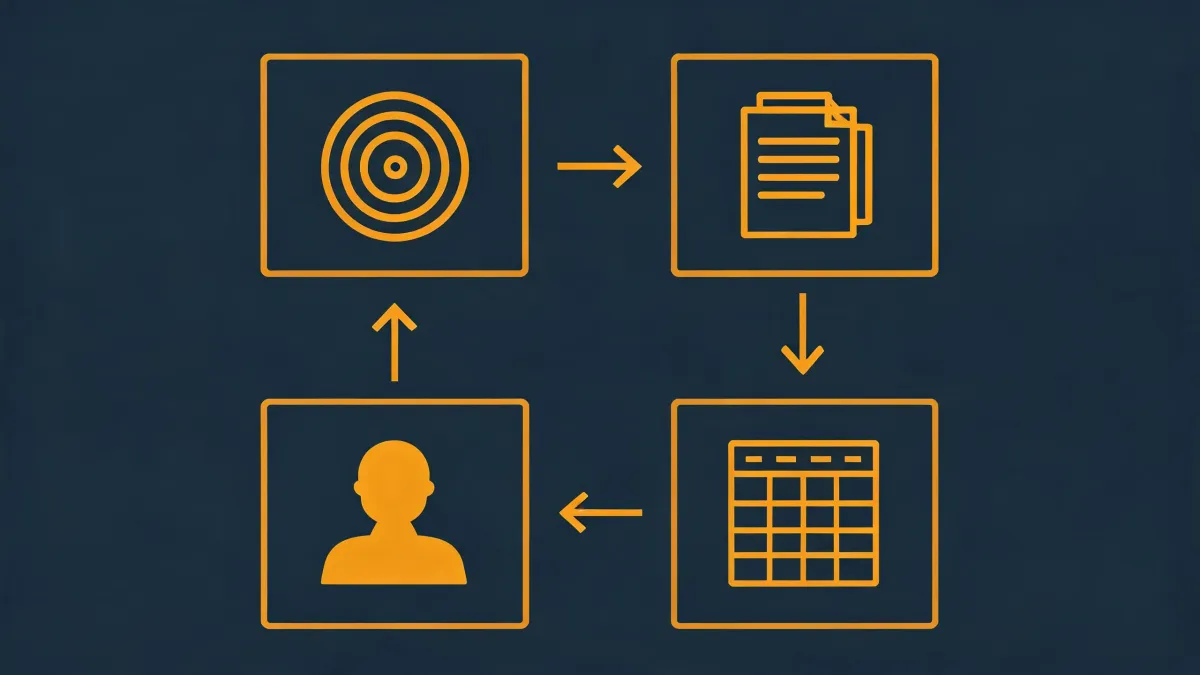
From the outside, comparing AI sales tools looks like comparing monthly fees. The reality is that the real spend lives in four places most teams don't track:
1. Configuration and integration time. Setting up an okki-go configuration isn't a set-it-and-forget-it exercise. You're mapping data sources, defining lead scoring thresholds, wiring enrichment endpoints, testing waterfall logic — and then doing it all again when the API changes. And the APIs will change. We've seen three breaking changes to enrichment providers in the past 18 months (as of April 2026, at least). If your tool doesn't have a clean upgrade path — think how to update the okki-go npm package without breaking your pipeline — you're paying in engineering hours. That's not free.
2. Data hygiene and verification. Anyone can send you a list of emails. The question is whether those emails are valid, whether your API documentation for email verification is actually usable by your SDRs, and whether the intent data is fresh enough to matter. Cheap email verification that resolves in batches might cost less per record, but if a proper verification API costs $2 more per thousand records and cuts hard bounces by 40%, the math isn't close. I don't have hard data on industry-wide bounce rates, but based on the campaigns we've run, going from discount verification to a waterfall enrichment + intent data setup reduced our hard bounce rate from around 4.7% to under 1%. That's a 3.7-point difference in deliverability risk that maps directly to pipeline.
3. Outreach sequence maintenance. Your outreach sequence isn't a one-time asset. It's a living system that needs tuning, testing, and repair. Tools that make sequence updates easy (versioning, A/B testing, conditional logic) look more expensive on paper. Tools that force you to rebuild manually every time you change a step look cheaper — until you factor in the 6 hours your RevOps analyst spends redoing work that should have been a two-minute update.
4. Recovery costs when things break. This is the one nobody budgets for. I'm not a developer, so I can't speak to the npm internals of every tool — but I've seen what happens when okki-go package updates break a running sequence. I've seen LinkedIn automation features get flagged because nobody evaluated the compliance risk. And I've seen the bill for the emergency rebuild. It's always 2–4x the cost of the premium option's annual subscription.
What RevOps Teams Should Actually Evaluate in LinkedIn Automation Tool Features
If you're a revenue operations team comparing LinkedIn automation tool features, here's the TCO lens I'd apply — the one I wish more clients used:
- Compliance monitoring: Does the tool surface usage-cap warnings before you hit them? Or do you find out because your account gets restricted? Penalty costs (restriction removal, lost outreach days, damaged profile trust) are part of TCO.
- Repair velocity: When something breaks — and it will — how fast can your team fix it without pulling in engineering? Tools with clear API documentation and proper versioning are cheaper at the margin, not more expensive.
- Integration overhead: How many hours per week does your team spend on upkeep? Multiply that by your fully-loaded engineer or RevOps hourly rate. That's your real monthly cost.
- Scaling friction: If you double your outreach volume next quarter, what breaks first? Cost that failure mode into your comparison now, not after Q3 numbers miss.
This is where the human-in-the-loop framing really matters — not as a marketing phrase, but as a cost-control mechanism. A tool that keeps a human reviewing output can catch misconfigurations before they burn through your entire lead list. That's cheaper than any fully automated system that fails silently.
"But Our Budget Is Tight"
I hear this every time I make this argument. And I get it — budget constraints are real. But here's the counter: if your budget is tight, you have even more reason to calculate TCO. A $500/month tool that costs you $3,000/month in maintenance, rework, and recovery isn't the budget option. It's the expensive option with better branding.
The legacy mindset — cheaper tools for smaller teams — comes from an era when tools were simpler and integration was surface-level. That's changed. Modern AI sales stacks are interconnected systems. Weak links in the chain don't save money. They shift costs downstream, where they're harder to see and harder to fix.
Trust me on this one: the invoice is the least interesting part of the deal.
The Reframe
Stop comparing line items. Start comparing the total cost of a working system: configuration + data quality + maintenance + recovery. If you're not tracking all four, you're comparing incomplete numbers — and you'll pick the wrong vendor.
In my role coordinating outbound infrastructure for high-stakes campaigns, the tools that look most expensive on the invoice have consistently been the cheapest to run. That's not a coincidence. It's math.
The next time you're evaluating an okki-go configuration or comparing outreach sequence platforms, ask one question before the pricing page: What will this actually cost me when it breaks? The answer will tell you more than any unit price ever could.